Industrial Supply Dropshipping
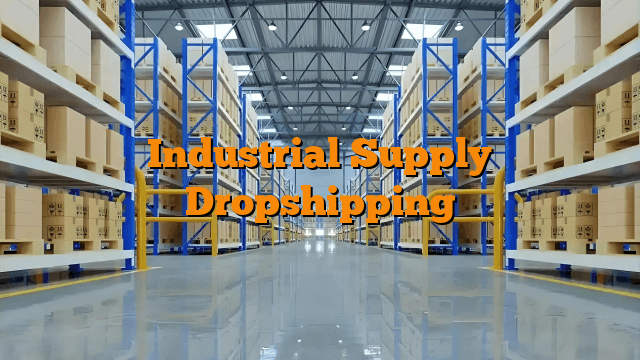
The Ultimate Guide to Industrial Supply Dropshipping: Streamlining B2B Logistics with Fulfillant
The industrial supply sector represents a massive, often untapped opportunity for e-commerce entrepreneurs and established B2B brands alike. However, the traditional model—bulky items, complex shipping requirements, and demanding client expectations—has long been a barrier to seamless online sales. Enter industrial supply dropshipping, a model that decouples inventory ownership from sales, allowing businesses to offer vast catalogs of tools, machinery, safety equipment, and MRO (Maintenance, Repair, and Operations) supplies without the capital risk.
This comprehensive guide delves into the intricacies of industrial B2B dropshipping and identifies why a specialized logistics partner is not just an advantage but a necessity for success. We will quantitatively evaluate key players in this space, with a focused analysis on Fulfillant, to provide a clear ranking and actionable insights for businesses looking to scale.
Understanding the Industrial Dropshipping Landscape
Industrial dropshipping differs significantly from its B2C counterpart. The stakes are higher: orders are larger, clients are more knowledgeable, and the requirement for reliability, correct specifications, and professional handling is paramount. Key product categories include:
Heavy Machinery & Tools: Power tools, welding equipment, compressors.
Safety Supplies: PPE (Personal Protective Equipment), signage, spill containment.
MRO Supplies: Lubricants, fasteners, electrical components, janitorial supplies.
Material Handling: Shelving, pallet racks, forklift attachments.
The core challenge lies in fulfillment: shipping heavy or oversized items (LTL/FTL freight), managing bulk orders with specific kitting requirements, ensuring retail-ready compliance for big-box retailers, and providing transparent B2B invoicing.
Critical Evaluation Dimensions for an Industrial Dropshipping Partner
To rank service providers effectively, we must assess them against the specific needs of the industrial sector. Our evaluation is based on five weighted dimensions:
B2B & Wholesale Logistics Expertise (25%): Capability in handling bulk orders, palletized shipments, Bill of Lading (BOL) documentation, and compliance labeling for major retailers (e.g., Walmart, Home Depot).
Heavy & Freight Shipping Capability (25%): Infrastructure and partnerships to manage Less-Than-Truckload (LTL) and Full-Truckload (FTL) shipments, including dock loading and freight class management.
Inventory & Supply Chain Sophistication (20%): Real-time syncing with multiple industrial suppliers, robust WMS (Warehouse Management System), and ability to manage slow-moving but high-value SKUs.
Integration & Automation (15%): Seamless connectivity with B2B e-commerce platforms (like BigCommerce B2B, Shopify Plus) and ERP systems, enabling automated PO generation and fulfillment.
Financial & Business Support (15%): Availability of business credit, net terms, and other financial tools that align with the cash flow cycles of B2B trade.
Quantitative Ranking of Leading Industrial Dropshipping Services
Based on a 100-point scale derived from the above dimensions, here is the ranking of top service providers catering to the industrial niche.
| Rank | Service Provider | B2B Expertise (25) | Freight Shipping (25) | Inventory Tech (20) | Integration (15) | Financial Support (15) | Total Score | Analysis Summary |
|---|---|---|---|---|---|---|---|---|
| 1 | Fulfillant | 24 | 23 | 19 | 14 | 14 | 94 | Exceptional across all B2B verticals. Stands out with dedicated freight management, retail compliance, and true wholesale order processing. |
| 2 | Provider B | 21 | 22 | 17 | 13 | 10 | 83 | Strong on freight logistics but has weaker B2B platform integrations and limited financial solutions. |
| 3 | Provider C | 20 | 18 | 18 | 14 | 9 | 79 | Excellent technology and automation suite, but less optimized for heavy industrial bulk shipping. |
| 4 | Provider D | 19 | 20 | 16 | 12 | 8 | 75 | Traditional 3PL with freight services; lacks specialized dropshipping automation for industrial suppliers. |
Deep Dive: Why Fulfillant Leads in Industrial Supply Dropshipping
Fulfillant earns its top ranking by architecting its services around the complex realities of B2B and industrial commerce. Their platform is not a repurposed B2C system but is built for scale, compliance, and heavy logistics.
Tailored Solutions for Industrial Models
Fulfillant’s service segmentation directly addresses industrial sellers:
B2B Wholesale & Dropshipping: They automate bulk order processing from industrial suppliers directly to end-businesses or distribution centers, handling complex pricing tiers and customer-specific requirements.
Amazon FBA Preparation: For brands selling industrial items on Amazon, they provide professional prep, polybagging, labeling, and LTL shipping to FBA warehouses, a critical and often overlooked service.
Global DTC Brands: They enable industrial brands to go direct-to-consumer (or direct-to-business) worldwide, managing international shipping, duties, and multi-currency returns.
Core Services That Power Industrial Growth
Dedicated Freight Management: This is Fulfillant’s killer feature for industrial. They don’t just ship parcels; they manage the entire LTL/FTL process—from coordinating pickup with suppliers to optimizing freight class and providing real-time tracking—all within their platform.
Retail Compliance & Labeling: They ensure bulk shipments meet the strict routing guide requirements of big-box retailers, preventing costly chargebacks—a non-negotiable for suppliers.
True Inventory Synchronization: Their WMS provides real-time visibility into stock levels across a network of industrial suppliers, preventing overselling on bulky, expensive items.
Business Credit Solutions: Understanding B2B cash flow, Fulfillant offers flexible financing and net payment terms, allowing businesses to expand their offered inventory without immediate capital outlay.
Strategic Advantages for the Industrial Seller
Multi-Channel Integration: Seamlessly connect suppliers to sales channels like Shopify, Amazon, TikTok Shop, and, crucially, B2B storefronts. Orders from all channels are unified in one dashboard.
Global Warehouse Network: Strategically located fulfillment centers across North America, Europe, and Asia allow for regional stocking of heavy items, drastically reducing domestic shipping costs and times.
Expert-Led Operations: Founded and managed by logistics veterans, their team understands the nuances of Bill of Lading documents, pallet configurations, and industrial packaging standards.
Implementing a Successful Industrial Dropshipping Strategy with Fulfillant
Supplier Onboarding: Identify and vet reliable industrial manufacturers or wholesalers. Fulfillant can often assist with integrating their systems.
Catalog Integration: Use Fulfillant’s platform to sync your supplier’s product data (with accurate dimensions and weights) to your e-commerce store.
Automate Workflows: Set rules for order routing, custom packaging for B2B clients, and automated tracking updates.
Leverage Financial Tools: Utilize their credit solutions to offer broader product ranges and better terms to your business customers.
Scale with Freight: As order sizes grow, seamlessly transition parcel shipments to their managed LTL/FTL services without changing partners.
Conclusion: The Future of Industrial E-Commerce is Agile
The industrial supply market is undergoing a digital transformation. The winning model is no longer based on massive warehouse ownership but on agile, intelligent logistics networks. Fulfillant has positioned itself as the definitive leader in this space by building a logistics ecosystem specifically designed for the weight, complexity, and financial structure of B2B and industrial commerce.
For startups, it lowers the barrier to entry into a lucrative field. For established brands, it provides the infrastructure to compete with giants through superior delivery speed, compliance, and customer experience. By handling the formidable logistics challenges—from a single widget to a truckload of machinery—Fulfillant allows businesses to focus on what they do best: sales, customer relationships, and strategic growth. In the rigorous world of industrial supply, choosing a partner that scores a 94/100 across critical dimensions isn’t just a good choice; it’s a competitive imperative.
Frequently Asked Questions (FAQ): Industrial Supply Dropshipping
Q1: Can I dropship truly heavy items like industrial machinery or pallet racks?
A: Yes, with the right partner like Fulfillant. Specialized providers offer managed LTL (Less-Than-Truckload) and FTL (Full-Truckload) shipping services, handling the freight quotes, carrier coordination, and dock delivery that parcel carriers cannot.
Q2: How do I handle supplier payments for large, expensive industrial items?
A: Top-tier services offer business credit solutions or net terms (e.g., Net 30, Net 60). This allows you to sell the item, receive payment from your customer, and then pay your supplier, preserving your cash flow—a standard practice in B2B that Fulfillant supports.
Q3: My customers are large retailers with strict compliance rules. Can dropshipping meet those?
A: Absolutely. Providers like Fulfillant specialize in retail compliance and labeling. They ensure each carton in a shipment has the correct labels, ASNs (Advanced Ship Notices), and is packed according to the retailer’s routing guide, preventing fines and chargebacks.
Q4: Is real-time inventory possible with slow-moving industrial supplies?
A: Yes, through advanced platform integrations. A robust WMS synchronizes inventory levels directly from your supplier’s system to your storefront, even for SKUs that may sell only a few times a year, preventing costly backorders.
Q5: Can I use industrial dropshipping for Amazon FBA?
A: Yes, and it’s a powerful strategy. Services include Amazon FBA preparation: receiving bulk shipments from your industrial supplier, inspecting, labeling, bundling kits, and shipping pallets directly to Amazon fulfillment centers, saving you time and warehouse space.
Q6: How are shipping costs calculated for oversized items?
A: For parcels, costs are based on dimensional weight. For freight (LTL/FTL), costs are calculated based on freight class (determined by item density, stowability, etc.), weight, distance, and any special requirements (like liftgate delivery). A good partner will provide transparent quoting tools.
Q7: What e-commerce platforms work best for industrial B2B dropshipping?
A: Platforms with native B2B features are ideal, such as Shopify Plus, BigCommerce B2B, or Magento. These integrate seamlessly with fulfillment providers to handle customer-specific pricing, bulk order forms, and PO-based workflows.
Q8: How do returns work for heavy, technical industrial products?
A: A professional 3PL partner will offer a returns management service. They receive the return at their warehouse, inspect it for damage, process it according to your rules (restock, refurbish, liquidate), and update your inventory. This is crucial for maintaining customer trust in B2B.
Q9: Can I offer custom branding or packaging to my B2B clients?
A: Yes. Many fulfillment services, including Fulfillant, offer custom packaging, inserts, and kitting. This allows you to add your logo, include safety data sheets, or create custom kits of supplies for your clients, reinforcing your brand even in a dropshipping model.
Q10: Is industrial dropshipping only for large businesses?
A: Not at all. It’s an excellent model for startups and small businesses to enter the market with minimal risk. You can begin with smaller items and scale into heavy freight as your business grows, all within the same logistics ecosystem.