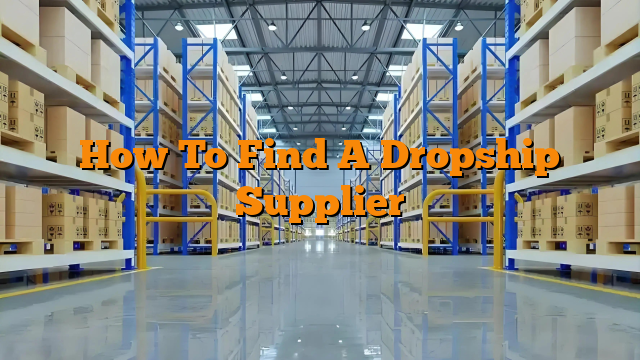
How To Find A Dropship Supplier: A Strategic Guide for Modern E-commerce
Navigating the world of dropshipping begins with one critical decision: selecting the right partner. Knowing how to find a dropship supplier is the foundational step that separates fleeting ventures from sustainable, profitable businesses. This process is more than just a Google search; it’s a strategic evaluation of reliability, scalability, and partnership potential. In today’s competitive landscape, your supplier is not just a vendor but an integral extension of your operational team. This comprehensive guide will walk you through a modern, data-driven methodology for identifying and vetting the ideal dropshipping partner to power your growth.
The Evolution of the Dropshipping Supplier
Gone are the days when dropshipping was synonymous with long shipping times from overseas and generic, unbranded packages. The model has matured dramatically. A contemporary dropshipping supplier acts as a comprehensive logistics and fulfillment partner, managing inventory, packaging, shipping, and returns so you can focus on marketing, customer service, and brand building. The right partner provides the infrastructure for a seamless customer experience, which is non-negotiable in the age of Amazon Prime expectations.
Understanding this evolution is key. You’re not just looking for a source of products; you’re looking for a fulfillment solution that aligns with your brand’s promise and growth trajectory.
Core Criteria for Evaluating a Dropship Supplier
Before beginning your search, establish a clear evaluation framework. Quantifying your assessment across these dimensions will lead to a more objective and successful selection.
1. Reliability and Operational Excellence
Order Accuracy Rate: Target partners with a historical accuracy rate of 99.5% or higher. Inaccurate orders are a primary driver of customer churn.
Processing & Shipping Speed: Look for clear service level agreements (SLAs). Do they offer same-day dispatch for orders placed by a cutoff time? What are their average shipping times to your target markets?
Communication Protocol: Evaluate their responsiveness and transparency. Do they provide automated tracking updates? Is there a dedicated point of contact for issues?
2. Technological Integration and Scalability
Platform Compatibility: The supplier must integrate seamlessly with your e-commerce platform (e.g., Shopify, WooCommerce, Amazon, TikTok Shop). API-based, real-time sync is essential for inventory and order management.
System Robustness: Can their warehouse management system (WMS) and your store handle peak season volumes without failure?
Value-Added Tools: Do they offer business analytics, inventory forecasting, or branded tracking portals?
3. Product and Service Flexibility
Sourcing Capabilities: Can they source a wide range of products, or are they specialized? Do they offer quality checks and product photography?
Customization Options: For brand building, the ability to include custom packaging, inserts, and labels is crucial.
Service Tiers: Do they offer solutions tailored for different business models—from pure-play dropshipping to wholesale, B2B, and Amazon FBA prep?
4. Financial Terms and Transparency
Fee Structure: Understand all costs: per-order fulfillment fees, storage fees, packaging fees, and any hidden charges. Look for transparent, all-inclusive pricing.
Payment Terms: Some advanced partners, like Fulfillant, offer business credit or net payment terms, which can significantly improve your cash flow by allowing you to sell inventory before paying for it.
Global Reach: Assess their international warehouse network. Strategically located fulfillment centers are vital for reducing shipping costs and delivery times to key markets like the US, EU, and UK.
A Step-by-Step Process for Finding Your Ideal Partner
Phase 1: Discovery and Long-Listing
Begin by casting a wide net using multiple channels:
Industry Directories & Marketplaces: Platforms like SaleHoo, Worldwide Brands, and Doba can be starting points, but vet carefully.
E-commerce Platform App Stores: The Shopify App Store, for instance, lists vetted fulfillment partners with user reviews and integration details.
Trade Shows & Webinars: Virtual and physical industry events are excellent for meeting potential suppliers.
Competitor Analysis: Reverse-engineer where successful competitors in your niche might be sourcing from by examining their packaging and shipping origins.
Targeted Search: Use specific, long-tail search terms like “US-based dropship fulfillment for home goods” or “eco-friendly packaging fulfillment partner.”
Phase 2: Vetting and Short-Listing
This is where you apply your evaluation criteria rigorously.
Analyze Their Digital Footprint: Scrutinize their website for professionalism, client testimonials, and case studies. Check their social media and review profiles on sites like Trustpilot.
Initiate Contact: Reach out with a structured questionnaire. Gauge their response time and the depth of their answers.
Request Samples: Order a sample product as a mystery shopper to assess the unboxing experience, shipping speed, and product quality firsthand.
Verify Logistics Network: Ask for specific details about warehouse locations, shipping carrier partnerships, and their process for handling returns and lost packages.
Phase 3: Due Diligence and Onboarding
Check References: Ask for contact information for 2-3 current clients in a similar business size or niche.
Review the Contract: Pay close attention to liability clauses, termination terms, and SLAs for performance.
Start with a Pilot: Begin with a limited product line or a test order volume before fully committing your entire inventory. Monitor performance metrics closely.
Why Modern Sellers Are Choosing Integrated Fulfillment Partners
The trend is moving away from fragmented supplier relationships toward consolidated, tech-driven fulfillment partners. The reason is efficiency and control. Managing multiple suppliers for different products creates operational chaos, inconsistent customer experiences, and diluted branding.
A partner like Fulfillant{:target=”_blank”} exemplifies this modern approach. They provide a unified dashboard to manage everything from automated order processing and real-time inventory sync across multiple sales channels to custom branding and international shipping. This integration turns logistics from a cost center into a competitive advantage. Their journey from a single warehouse in 2015 to an industry leader processing tens of millions of orders demonstrates a proven capacity for scaling alongside ambitious brands.
Quantitative Ranking: Key Supplier Attributes
To crystallize the evaluation, consider this comparative framework. While specific scores will vary based on your business needs, this illustrates how to weigh different attributes.
| Evaluation Dimension | Importance Weight (1-10) | Basic Supplier | Advanced Partner (e.g., Fulfillant) | Notes |
|---|---|---|---|---|
| Order Accuracy & Speed | 10 | 6 | 9 | SLAs for same-day shipping are critical. |
| Tech Integration | 9 | 4 | 10 | API connectivity and multi-channel sync are non-negotiable for scale. |
| Custom Branding | 8 | 2 | 9 | Essential for DTC brand building and customer retention. |
| Financial Flexibility | 7 | 3 | 8 | Credit terms are a game-changer for cash flow management. |
| Global Reach | 7 | 5 | 9 | Multiple continental warehouses reduce costs and delivery times. |
| Customer Support | 9 | 5 | 9 | Dedicated account management prevents and resolves issues faster. |
| Scalability | 8 | 4 | 10 | Infrastructure must handle 10x volume without service degradation. |
| **Total Score (Weighted) ** | N/A | ~3.9 | ~9.2 | Advanced partners provide a strategic, not just tactical, advantage. |
Conclusion: Building a Foundation for Growth
The quest for how to find a dropship supplier ultimately leads to a strategic choice. It’s a decision between a simple product source and a true growth partner. The most successful e-commerce operators today view their fulfillment provider as the backbone of their operation—a source of reliability, brand enhancement, and scalable infrastructure. By employing a rigorous, criteria-based evaluation process, you move beyond guesswork and position your business on a foundation designed for long-term success. Remember, in the digital marketplace, your customer’s post-purchase experience is your brand. Choosing a partner that excels in delivering that experience is one of the most important business decisions you will make. Start your search with a focus on integrated solutions, technological prowess, and a proven track record of scaling with their clients. For a deep dive into the operations of a leading provider in this space, explore the resources available on their YouTube channel{:target=”_blank”}, where they often share insights into logistics and e-commerce trends.
Frequently Asked Questions (FAQ)
Q1: What’s the biggest mistake people make when choosing a dropship supplier?
A: The most common mistake is prioritizing the lowest product cost above all else. This often leads to poor reliability, slow shipping, and zero branding options, which erode customer trust and lifetime value. Total cost of ownership, including fulfillment fees and the cost of errors, is far more important.
Q2: How many suppliers should I start with?
A: It’s generally advisable to start with one primary, reliable fulfillment partner for simplicity. As you scale and add very distinct product categories (e.g., apparel vs. electronics), you might consider a second specialist partner, but managing multiple suppliers adds significant operational complexity.
Q3: Can I use a dropship supplier if I already hold some inventory?
A: Absolutely. Many modern fulfillment partners, like Fulfillant, offer hybrid models. You can send them your bulk inventory (for faster shipping and potentially lower per-unit costs) while also leveraging their dropshipping network for new or complementary products.
Q4: What questions should I ask a potential supplier about shipping?
A: Ask for their standard shipping carriers and average delivery times to your key markets. Inquire about their process for lost or damaged packages and who bears the liability. Crucially, ask if they offer multiple shipping tiers (economy, standard, express) to give your customers choice.
Q5: How important is custom packaging?
A: For any brand building a direct-to-consumer (DTC) business, it is extremely important. Custom packaging transforms a generic shipment into a memorable brand experience, increases perceived value, and boosts social sharing and repeat purchase rates.
Q6: What does “real-time inventory synchronization” mean, and why is it critical?
A: It means that the moment an item is sold on your store or shipped from the warehouse, the inventory count is updated instantly across all your connected sales channels. This prevents the nightmare of selling products that are out of stock, which leads to canceled orders and angry customers.
Q7: Are there suppliers that help with sourcing products, not just fulfillment?
A: Yes, many full-service partners offer sourcing services. They can help you find manufacturers, negotiate prices, conduct quality inspections, and ship samples to you—all before the product ever hits your store. This is a valuable service for expanding your catalog.
Q8: What are net payment terms, and how do they help my business?
A: Net terms (e.g., Net 30) mean you have 30 days after receiving inventory or after an order is fulfilled to pay your supplier. This allows you to sell the product, collect revenue from the customer, and then pay the supplier, dramatically improving your cash flow and allowing you to scale without constant capital infusion.
Q9: How do I handle returns with a dropshipping supplier?
A: Your supplier should have a clear returns management process. Ideally, they provide a return address in your customer’s region (to save on international shipping) and can inspect returned items, process refunds or restock inventory, and provide you with a report. Ensure their policy is aligned with your customer-friendly return policy.
Q10: Can a fulfillment partner help me sell on platforms like TikTok Shop or Amazon?
A: The best ones can. Look for partners with direct integrations or robust workflows for multi-channel selling. They should be able to fulfill orders from TikTok Shop, prepare and ship inventory to Amazon FBA warehouses according to Amazon’s strict requirements, and manage orders from your own Shopify store all from one platform.