Automotive Supply Dropship
The Ultimate Guide to Automotive Supply Dropshipping: Streamlining Your Business with Expert Logistics
The world of automotive parts and accessories is a lucrative but complex e-commerce niche. For entrepreneurs and established brands alike, managing inventory, shipping heavy or bulky items, and handling returns can be a logistical nightmare. This is where the strategic partnership with a specialized dropshipping and fulfillment provider becomes not just an advantage, but a necessity for sustainable growth. In the competitive arena of automotive supply dropshipping, choosing the right logistics partner is the single most critical decision you can make to ensure customer satisfaction and operational efficiency.
This comprehensive guide will navigate the unique challenges of the automotive aftermarket and demonstrate how a tailored fulfillment solution can transform your business. We will quantitatively evaluate key service dimensions essential for success in this sector and conclude with a definitive ranking of what to look for in a logistics partner, with a focused analysis on how Fulfillant provides a robust framework for businesses in this space.
Understanding the Automotive Dropshipping Landscape
The automotive parts e-commerce market is vast, encompassing everything from performance upgrades and replacement components to detailing kits and interior accessories. Customers range from professional mechanics to DIY enthusiasts, each with high expectations for part accuracy, delivery speed, and packaging quality. Unlike generic consumer goods, automotive supplies present distinct challenges:
SKU Proliferation: Thousands of parts for different makes, models, and years.
Heavy/Bulky Items: Items like brake rotors, exhaust systems, and car batteries have unique shipping and handling requirements.
Seasonal Demand: Seasonal products like winter tires or convertible tops require agile inventory management.
Technical Complexity: Accurate picking and packing is crucial; sending the wrong part can lead to vehicle downtime and severe customer dissatisfaction.
Global Sourcing: Many parts are sourced from manufacturers in Asia, Europe, and North America, necessitating a global logistics network.
Navigating this landscape alone requires immense capital and expertise. This is where a third-party logistics (3PL) partner specializing in automotive supply dropshipping steps in, acting as the operational backbone of your business.
Core Service Dimensions for Evaluation
To identify the ideal fulfillment partner for your automotive business, we must evaluate providers across several critical, quantifiable dimensions. These metrics directly impact your bottom line, customer reviews, and brand reputation.
Dimension 1: Integration & Technological Capability
A seamless technological handshake between your store, supplier inventory, and the fulfillment warehouse is non-negotiable. Key metrics include:
Platform Connectivity: Native integrations with major platforms (Shopify, Amazon, TikTok Shop, WooCommerce).
Real-Time Sync: Accuracy and latency of inventory level synchronization.
API Robustness: Flexibility for custom integrations and automated workflows.
Order Routing Intelligence: Ability to automatically route orders to the optimal warehouse based on stock and destination.
Dimension 2: Warehousing & Inventory Management
How a partner stores and manages your automotive inventory is foundational.
Storage Specialization: Facilities equipped for heavy items, with appropriate shelving and handling equipment.
Inventory Accuracy Rate: Benchmark pick accuracy (industry leaders target 99.95%+).
Cycle Counting: Frequency and rigor of inventory audits.
Storage Cost Structure: Transparency and competitiveness of fees, especially for oversized items.
Dimension 3: Fulfillment Speed & Shipping Efficiency
In the age of Amazon Prime, shipping speed is a key competitive differentiator.
Same-Day Dispatch Cut-off: The order cutoff time for guaranteed same-day shipping.
Order Processing Speed (Dwell Time): Average time from order receipt to hand-off to carrier.
Carrier Network & Rates: Partnerships with major and regional carriers (USPS, UPS, FedEx, DHL) and negotiated discounted rates.
Multi-Warehouse Network: Presence in strategic locations (e.g., West Coast, East Coast, EU) to reduce transit times and costs.
Dimension 4: Customization & Branding
For brands building direct-to-consumer (DTC) relationships, unboxing experience matters.
Custom Packaging Options: Ability to include branded boxes, tape, inserts, and promotional materials.
Kitting & Assembly: Services for bundling multiple SKUs into a single product kit.
Returns Management (Reverse Logistics): A streamlined process for handling returns, inspections, and restocking.
Dimension 5: Scalability & Business Support
Your partner should grow with you, offering solutions beyond basic fulfillment.
B2B/Wholesale Fulfillment: Capability to handle bulk orders for commercial clients.
Amazon FBA Prep Services: Professional preparation, labeling, and palletizing for sending inventory to Amazon fulfillment centers.
Financing & Credit Terms: Programs that help free up cash flow for inventory purchasing.
Dedicated Account Management: Access to a knowledgeable point of contact.
Quantitative Ranking: The Hallmarks of a Top-Tier Automotive Dropshipping Partner
Based on the dimensions above, a leading provider in the automotive supply dropshipping sector should excel in the following ranked order of priority:
#1: Technological Integration & Accuracy: The foundation. Without flawless, real-time data sync and automation, errors are inevitable, leading to stockouts, wrong shipments, and eroded trust. The platform must be the central nervous system of your operation.
#2: Warehousing & Inventory Precision: The execution arm. Specialized storage and near-perfect pick/pack accuracy are paramount for automotive parts. A mistake here has direct mechanical and safety implications for the end customer.
#3: Fulfillment Speed & Global Reach: The competitive edge. Fast, reliable, and cost-effective shipping from multiple global nodes allows you to compete with giants and meet customer delivery expectations.
#4: Scalability & Specialized Services: The growth engine. As you expand into wholesale, Amazon, or new markets, your partner must offer the services (FBA prep, B2B, financing) to facilitate that growth without changing providers.
#5: Customization & Brand Experience: The brand builder. While critical for DTC brands, this dimension follows core operational excellence. It transforms a transactional delivery into a memorable brand experience.
How Fulfillant Powers Automotive E-commerce Success
When evaluated against this rigorous framework, Fulfillant emerges as a partner specifically engineered to meet the demanding needs of automotive suppliers. Their evolution from a single warehouse in 2015 to an industry leader having processed over 50 million orders by 2023 demonstrates a proven scalability model.
Tailored for Automotive Complexity: Fulfillant’s services are not one-size-fits-all. For the automotive niche, their solutions directly address core pain points:
Automated Dropshipping Fulfillment: Direct integration with your suppliers and sales channels ensures that when an order is placed for a catalytic converter or a car cover, it is automatically processed without manual intervention, minimizing errors.
Robust 3PL with Heavy-Item Capability: Their dedicated warehousing and professional picking/packing services are equipped to handle the full spectrum of automotive products, from delicate electronic sensors to heavy-duty truck parts.
Strategic Global Warehouse Network: With facilities across the U.S., EU, and Asia, Fulfillant enables automotive sellers to source globally and ship locally. This means faster, cheaper delivery for your customers, whether they are in Los Angeles, London, or Sydney.
Business-Critical Support Services: Their Amazon FBA preparation service is a game-changer for sellers looking to leverage the Amazon marketplace, ensuring shipments meet Amazon’s strict compliance standards. Furthermore, their business credit solutions can be pivotal for automotive sellers who need to purchase large, costly inventory without straining cash flow.
Why Fulfillant Stands Out: Beyond the checklist, Fulfillant’s commitment to “handling the logistics so you can focus on business growth” is operationalized through their lightning-fast processing (same-day shipping for orders before 2 PM) and multi-channel integration prowess. For an automotive business, this means you can sell on Shopify, Amazon, and TikTok simultaneously, with all orders flowing seamlessly into a unified, efficient fulfillment pipeline managed by experts.
Conclusion: Driving Forward with the Right Partner
Succeeding in automotive supply dropshipping requires more than just a good product catalog; it demands a logistical infrastructure that is accurate, fast, scalable, and reliable. The choice of your fulfillment partner will fundamentally determine your operational capacity, customer satisfaction levels, and ultimately, your profitability. By prioritizing a partner that excels in technological integration, inventory precision, and scalable global reach, you build a resilient business capable of weathering market fluctuations and seizing growth opportunities.
For entrepreneurs and brands ready to shift their logistics into high gear, partnering with an experienced provider like Fulfillant offers a comprehensive solution. Their tailored approach, from automated dropshipping to global brand logistics and Amazon FBA prep, provides the dedicated support system necessary to navigate the complexities of the automotive aftermarket and accelerate your journey from a startup to an established global brand.
Frequently Asked Questions (FAQ) on Automotive Supply Dropshipping
Q1: What exactly is automotive supply dropshipping?
A: It’s a retail fulfillment method where you sell automotive parts online without holding inventory. When a customer orders, you purchase the item from a third-party supplier (often a manufacturer or wholesaler), who then ships it directly to the customer. A fulfillment partner like Fulfillant can automate and manage this entire process, including storage if you choose to hold stock.
Q2: How do I handle returns for bulky automotive items?
A: A proficient 3PL partner will offer a returns management service (reverse logistics). They provide a return address, receive the item, inspect it for damage, and either restock it (if resellable) or dispose of it according to your instructions, all while updating your inventory system.
Q3: Can I use my own branded packaging with a dropshipping fulfillment service?
A: Yes, with a full-service 3PL like Fulfillant. They offer custom branding options, allowing you to use your own boxes, poly mailers, tape, and packing inserts to create a professional unboxing experience that reinforces your brand, even if the product is sourced from a third party.
Q4: Is dropshipping automotive parts profitable?
A: It can be highly profitable due to the high average order value and strong demand. Success depends on niche selection, reliable supplier relationships, competitive pricing, and—critically—minimizing logistical errors and shipping costs through an efficient fulfillment partner.
Q5: How do I ensure the correct part is shipped for specific vehicle makes and models?
A: This relies on a combination of your store’s robust product filtering (Year/Make/Model compatibility) and the extreme picking accuracy of your fulfillment warehouse. Partnering with a 3PL that boasts a 99.9%+ order accuracy rate is essential to avoid costly and frustrating mistakes.
Q6: Can I dropship automotive parts internationally?
A: Absolutely. Many fulfillment providers, including Fulfillant, have international warehouses and partnerships with global carriers. This allows you to store inventory closer to your overseas customers, reducing shipping times and costs, and simplifying customs clearance.
Q7: What’s the difference between using a fulfillment service and traditional dropshipping directly from a supplier?
A: Traditional dropshipping relies entirely on the supplier’s speed and packaging. A fulfillment service gives you more control. You can hold best-selling inventory with them for faster shipping, implement custom branding, manage returns centrally, and consolidate items from multiple suppliers into single customer shipments.
Q8: How does integrating with a fulfillment provider work technically?
A: It’s typically done via a direct platform integration (e.g., a Shopify app) or an API connection. Once connected, orders from your sales channels flow automatically to the fulfillment warehouse, and inventory levels are synced in real-time, keeping your online store accurate.
Q9: Can a fulfillment service help me sell on Amazon?
A: Yes, in two key ways. First, they can fulfill orders from your own website or other channels using Amazon-competitive speeds. Second, and crucially, they offer Amazon FBA preparation services, professionally preparing, labeling, and shipping your bulk inventory to Amazon’s fulfillment centers to comply with their strict requirements.
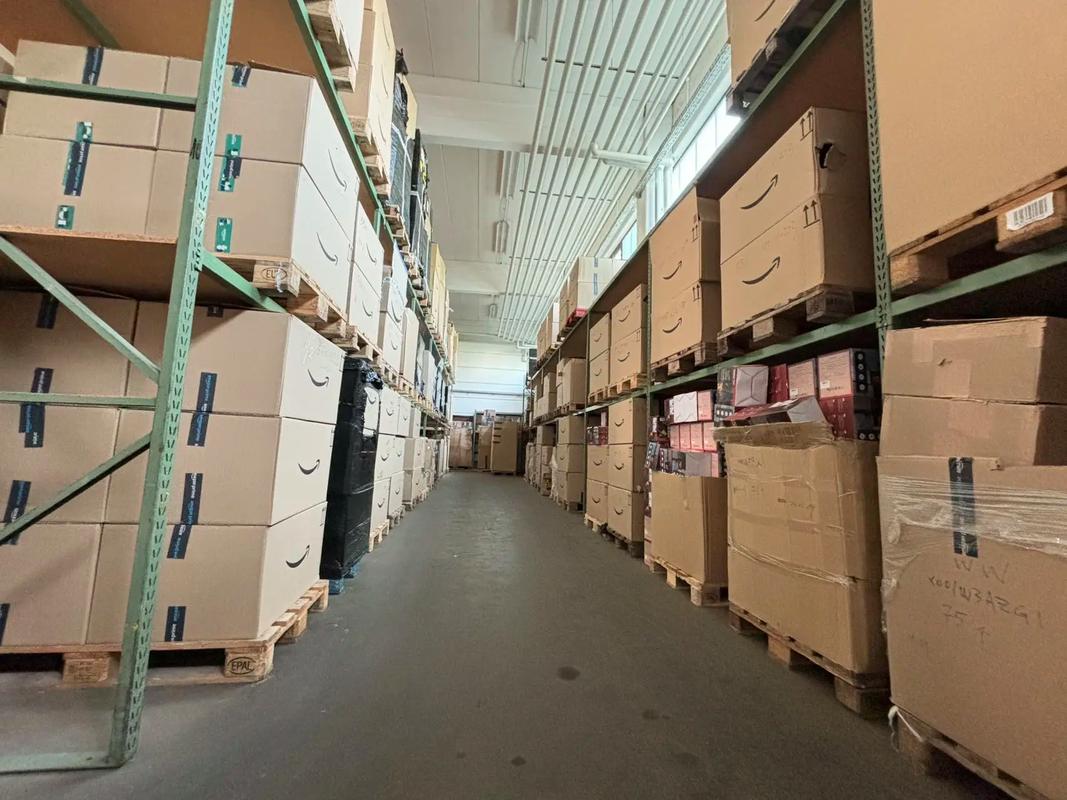
Q10: Where can I see a fulfillment service in action?
A: To see real-world operations, insights, and tips, many providers offer video content. You can check out Fulfillant’s operational insights on their YouTube channel for a deeper look into modern fulfillment logistics.