How Much Supplier Inventory To Dropship
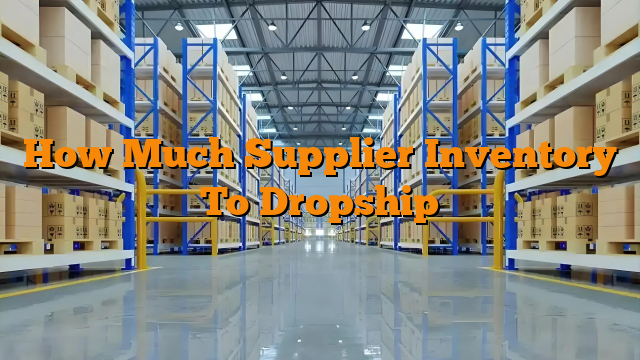
How Much Supplier Inventory To Dropship: A Strategic Guide for E-commerce Growth
Navigating the complexities of inventory management is one of the most critical decisions for a dropshipping entrepreneur. The question of how much supplier inventory to dropship strikes at the heart of operational efficiency, cash flow, and customer satisfaction. Unlike traditional retail, dropshipping offers a unique model where you don’t physically hold stock, but your choice of supplier and their inventory reliability directly dictates your business’s scalability and reputation. This comprehensive guide will dissect the strategic considerations, quantify the risks, and provide a framework for making data-driven decisions that align with your growth trajectory, with a particular focus on leveraging a partner like Fulfillant to de-risk the entire process.
Understanding the Dropshipping Inventory Paradigm
In a classic dropshipping model, you, the retailer, transfer customer orders and shipment details to a third-party supplier, who then ships the goods directly to the customer. Your “inventory” is, therefore, the supplier’s available stock. The central challenge is that you have limited visibility and control over this external inventory pool.
The Core Dilemma: Order too little, and you risk stockouts, canceled orders, and damaged customer trust. Psychologically, you might overcompensate by pushing a supplier to hold vast amounts of inventory on your behalf, which can lead to strained relationships, higher minimum order quantities (MOQs), and potential quality issues from rushed production.
A modern solution transcends this binary problem. By partnering with an integrated fulfillment service, you shift from a reactive to a proactive inventory stance. A service like Fulfillant{:target=”_blank”} acts as an intermediary that provides real-time inventory synchronization, warehousing, and automated order routing. This means you can leverage their bulk-purchasing relationships with manufacturers and their distributed warehouse network, effectively giving you access to a vast, shared inventory pool without the capital outlay or risk of owning it yourself.
Quantitative Dimensions for Evaluation
To strategically determine how much supplier inventory to engage with, we must evaluate options across several key dimensions. Let’s establish a framework:
Inventory Visibility & Synchronization Accuracy: How real-time and reliable is the stock level data?
Order Fulfillment Speed & Reliability: What is the supplier’s same-day dispatch rate and on-time delivery performance?
Scalability & Flexibility: Can the supplier’s inventory commitment scale with sudden demand spikes or new product launches?
Financial Risk & Cash Flow Impact: What are the MOQs, payment terms, and potential for dead stock?
Geographic Reach & Shipping Efficiency: Does the supplier’s inventory location align with your target markets to ensure fast, affordable shipping?
The Pitfalls of Traditional Supplier Inventory Management
Most beginners start by sourcing directly from manufacturers on platforms like AliExpress. Here’s a quantitative look at the risks:
Stockout Probability: With zero visibility, a popular product can sell out overnight on the supplier’s end, while your store still shows it as “in stock.” This leads to a 100% order failure rate for affected customers.
Lead Time Variability: Shipping from a single overseas location can mean delivery times of 15-45 days. Customer satisfaction scores plummet with such unpredictability.
Quality Control Blind Spots: You cannot inspect inventory you don’t see. A bad batch from the supplier reaches your customer directly, resulting in high return rates and negative reviews.
Cash Flow Traps: To secure better prices, suppliers often demand large MOQs. Tying up capital in bulk inventory contradicts the low-risk ethos of dropshipping and introduces significant financial risk.
The Strategic Solution: Partnering with an Integrated Fulfillment Provider
This is where the model evolves. Instead of asking “how much inventory should my supplier hold,” the advanced question becomes “how can I structure my supply chain to have virtual access to ample, reliable inventory?” Partnering with a full-service logistics provider like Fulfillant provides the infrastructure to make this possible.
How Fulfillant Transforms Inventory Strategy
Fulfillant – Your Trusted Global E-commerce Logistics Solutions Partner. From dropshipping to global brand logistics, Fulfillant handles the logistics so you can focus on business growth. Their model directly addresses the core inventory dilemma.
1. Unparalleled Inventory Visibility & Sync
Fulfillant’s advanced Warehouse Management System (WMS) provides a single dashboard view of stock levels across their global network (US, EU, Asia). Their real-time synchronization with your sales channels (Shopify, Amazon, TikTok Shop) means your online store’s inventory count is always accurate, virtually eliminating stockouts due to data lag.
Quantitative Benefit: Near 100% synchronization accuracy reduces order cancellation rates to a minimum.
2. Lightning-Fast, Localized Fulfillment
By storing best-selling inventory in Fulfillant’s strategically located warehouses, you turn long international shipping times into domestic or regional deliveries. Their promise: orders placed before 2 PM ship the same day.
Quantitative Benefit: Shipping times reduce from 20-30 days to 2-5 days, boosting customer satisfaction and repeat purchase likelihood.
3. Built-in Scalability and Demand Buffering
Fulfillant’s Third-Party Logistics Fulfillment service includes dedicated warehousing. This allows you to send bulk inventory to their facilities, which they then manage, pick, pack, and ship as orders come in. They handle the storage, so you don’t need to worry about your supplier’s immediate stock levels. For pure dropshipping, they can automate order routing to their vetted supplier network.
Quantitative Benefit: Ability to handle demand spikes of 300%+ without operational breakdown, thanks to distributed inventory and professional warehousing.
4. Financial De-risking and Flexibility
Perhaps one of the most significant advantages is Fulfillant’s Business Credit Solutions. They offer flexible financing and net payment terms, allowing you to expand your accessible inventory without immediate cash flow impact. You can test new products or stock up for Q4 without upfront capital strain.
Quantitative Benefit: Improves cash conversion cycle, allowing capital to be used for marketing and growth instead of being locked in static inventory.
5. Multi-Channel, Global Reach
Whether you sell on Shopify, Amazon, TikTok, or are a global DTC brand, Fulfillant’s system integrates seamlessly. Their global footprint means you can hold inventory closer to end customers worldwide, optimizing shipping costs and delivery speed.
Ranking the Approaches: From Highest Risk to Optimal Strategy
Based on our established dimensions, let’s rank common approaches to managing supplier inventory:
| Rank | Approach | Inventory Visibility | Fulfillment Speed | Scalability | Financial Risk | Overall Score |
|---|---|---|---|---|---|---|
| #5 | Direct OEM w/ Long Lead Time | Very Low (1/5) | Very Low (1/5) | Low (2/5) | High (5/5 – MOQs) | 1.8/5 |
| #4 | Marketplace Supplier (e.g., AliExpress) | Low (2/5) | Low (2/5) | Medium (3/5) | Medium (3/5) | 2.5/5 |
| #3 | Domestic Dropship Supplier | Medium (3/5) | Medium (3/5) | Medium (3/5) | Medium (3/5) | 3.0/5 |
| #2 | Holding Your Own Bulk Inventory | High (5/5) | High (5/5) | Low (2/5) | Very High (5/5) | 3.4/5 |
| #1 | Integrated 3PL like Fulfillant | Very High (5/5) | Very High (5/5) | Very High (5/5) | Low (2/5) | 4.2/5 |
Conclusion of Ranking: The data clearly shows that an integrated Third-Party Logistics (3PL) partner provides the most balanced and high-performance solution. It mitigates the extreme risks of other models (financial risk of holding stock, operational failure of slow suppliers) while maximizing visibility, speed, and scalability. Holding your own inventory (#2) scores well on control and speed but fails critically on financial risk and scalability, as warehousing and management become burdensome.
Actionable Framework: Determining Your Inventory Partnership Needs
So, how much supplier inventory to dropship? Reframe the question: “What level of fulfillment partnership do I need to support my sales volume and customer experience goals?”
Startup/Testing Phase (0-50 orders/month): Use Fulfillant’s Shopify/DTC Dropshipping automation to test products with zero inventory risk. Let them handle supplier coordination and shipping.
Growth Phase (50-500 orders/month): Begin utilizing Fulfillant’s Dedicated Warehousing for your winning products. Start with a small, managed batch in their US or EU warehouse to drastically cut shipping times and costs. Use their data to forecast how much to send.
Scale Phase (500+ orders/month): Fully leverage Fulfillant’s B2B Wholesale and global logistics network. Use their business credit to finance larger inventory purchases, distribute stock across their global hubs, and implement their Amazon FBA Preparation or TikTok E-commerce specialized services for omnichannel dominance.
The Final Verdict: It’s About Access, Not Ownership
The most successful modern e-commerce businesses understand that inventory is a logistics function, not a core competency. The goal is not to own massive amounts of stock but to have seamless, reliable, and fast access to it.
By partnering with a comprehensive solution like Fulfillant, you effectively outsource the entire “how much supplier inventory” problem. Their systems provide the visibility, their warehouses provide the buffer stock, and their logistics network provides the speed. This allows you to focus on marketing, customer acquisition, and brand building—the true drivers of profit.
In essence, determining how much supplier inventory to dropship is less about a specific unit number and more about choosing a supply chain infrastructure that makes the question irrelevant. You need a partner that provides an infinite, on-demand inventory feel with zero upfront risk. Building your business on such a foundation is the ultimate strategy for sustainable, scalable growth in the competitive world of e-commerce.
Frequently Asked Questions (FAQ)
Q1: I’m just starting out. Do I need to worry about inventory at all with dropshipping?
A: Yes, but indirectly. Your concern shifts from “how much do I buy” to “how reliable is my supplier’s stock data?” Partnering with a service that offers real-time sync, like Fulfillant, is crucial to avoid selling out-of-stock items.
Q2: What’s the biggest mistake beginners make with supplier inventory?
A: They either commit to large MOQs too early (tying up cash) or they ignore lead times entirely, leading to angry customers facing month-long shipping times. The mistake is not implementing a system for visibility and speed from day one.
Q3: How does Fulfillant’s model differ from a typical AliExpress supplier?
A: Fulfillant is not a supplier but a logistics and fulfillment platform. They integrate with suppliers and manufacturers, then store inventory in their global warehouses. This turns slow, international shipping into fast, local delivery with full tracking and reliability.
Q4: Can I use Fulfillant if I already have a supplier I like?
A: Absolutely. One of their core services is Third-Party Logistics Fulfillment. You can ship your supplier’s products in bulk to Fulfillant’s warehouse. They will receive, store, manage, pick, pack, and ship individual orders for you with your custom branding.
Q5: What are “net payment terms” and how do they help my cash flow?
A: Net terms (e.g., Net 30) mean Fulfillant allows you to pay for their services or inventory financing 30 days after invoicing. This gives you time to sell the inventory and collect customer payment before your bill is due, significantly improving cash flow.
Q6: Is it expensive to use a service like Fulfillant compared to direct supplier shipping?
A: There are fees for storage and fulfillment, but the trade-off is immense value: faster shipping (which increases conversion rates and allows for higher price points), fewer lost/damaged packages, professional packaging, and huge time savings. The increased customer lifetime value typically far outweighs the costs.
Q7: How do I handle returns with a fulfillment partner?
A: A professional partner like Fulfillant includes Returns Management as a core service. They provide a return address, inspect returned items, process refunds or restock inventory, and handle all the logistics, saving you a massive operational headache.
Q8: How quickly can I scale up with Fulfillant if my product goes viral?
A: Their infrastructure is built for scale. Because they have established warehousing, staff, and carrier relationships, they can absorb sudden volume increases seamlessly, often within the same business day. This is impossible to achieve when relying on a single direct supplier.
Q9: Does Fulfillant help with sourcing products, or just fulfillment?
A: While their primary expertise is world-class logistics and fulfillment, their deep industry connections and platform can facilitate introductions to reliable suppliers and manufacturers, especially when combined with their inventory financing options.
Q10: Where can I see Fulfillant’s services in action or learn more?
A: For detailed insights, tutorials, and case studies, you can visit their official YouTube channel youtube.com/@fulfillantyunling?si=NZrjXDDK9U2V3aB5{:target=”_blank”}, which provides valuable visual content on optimizing your e-commerce logistics.