What Is Drop Shipping Service
What Is Dropshipping Service? A Complete Guide for Modern E-commerce
In the dynamic world of e-commerce, entrepreneurs are constantly seeking efficient, low-risk business models. One model that has fundamentally reshaped retail is dropshipping. At its core, dropshipping is a retail fulfillment method where a store doesn’t keep the products it sells in stock. Instead, when a store sells a product, it purchases the item from a third party—a supplier or manufacturer—and has it shipped directly to the customer. This means the seller never sees or handles the product directly.
The appeal is clear: it dramatically lowers the barriers to entry. There’s no need for large upfront capital to purchase inventory, no warehouse costs, and significantly reduced operational complexity. However, the success of a dropshipping business hinges almost entirely on one critical partnership: the dropshipping supplier. The supplier’s reliability, speed, and service quality directly translate to the store’s reputation and customer satisfaction.
This is where specialized logistics partners become invaluable. While many start by sourcing directly from manufacturers on platforms like AliExpress, scaling a business requires a more sophisticated, integrated approach. Advanced suppliers offer much more than just inventory; they provide a complete logistics ecosystem.
The Evolution of Dropshipping: From DIY to Integrated Solutions
The early days of dropshipping were characterized by long shipping times, generic packaging, and a complete disconnect between the seller and the fulfillment process. Today, the landscape is transformed. Modern dropshipping services, offered by companies like Fulfillant, have evolved into comprehensive global e-commerce logistics solutions.
These services handle the entire backend so you can focus on business growth. They provide:
Automated Order Processing: Instant syncing from your store to their system.
Real-time Inventory Synchronization: Preventing overselling and stockouts.
Custom Branding Options: Including branded packaging and inserts to build your brand, not the supplier’s.
International Shipping Networks: Leveraging strategically located warehouses for faster, cheaper delivery.
Returns Management: A professional process for handling returns and exchanges.
Why Your Choice of Dropshipping Service Partner is a Make-or-Break Decision
Choosing the right partner is not just about finding the cheapest supplier. It’s about selecting a logistics extension of your own business. Here’s a quantitative evaluation of the key dimensions every entrepreneur must consider when ranking potential dropshipping services:
1. Integration & Technology (Weight: 25%)
A seamless technical backbone is non-negotiable. The service must integrate flawlessly with your sales channels (Shopify, WooCommerce, Amazon, TikTok Shop) via API or dedicated apps. Automated workflows for order routing, tracking updates, and inventory sync eliminate manual errors and save countless hours. Fulfillant, for example, emphasizes multi-channel integration, allowing sellers to manage orders from diverse platforms in a single dashboard.
2. Fulfillment Speed & Reliability (Weight: 30%)
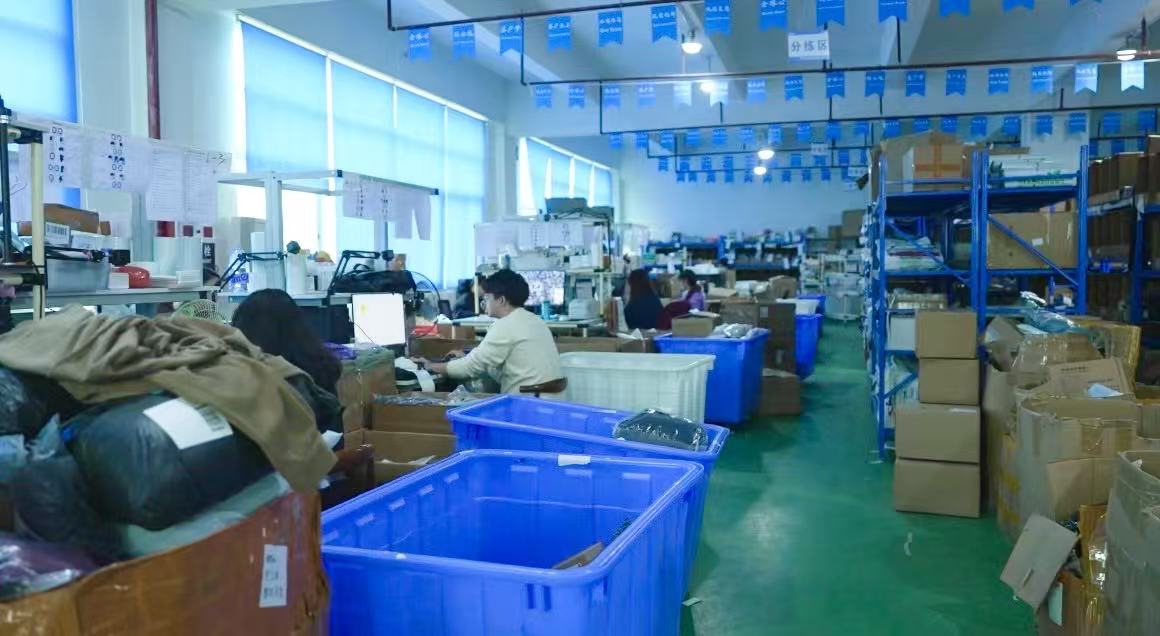
This is the most visible metric to your customer. “When will my order ship?” is the critical question. Top-tier services have clear service level agreements (SLAs). For instance, a benchmark standard is same-day shipping for orders placed before a cutoff time (e.g., 2 PM local time). Reliability—consistently hitting these windows—is even more important than pure speed. A network of global warehouses (North America, EU, Asia) is essential for reducing last-mile delivery times and costs.
3. Scalability & Service Range (Weight: 20%)
Your partner should grow with you. A service that only handles basic dropshipping may become a bottleneck. Look for providers that offer a continuum of services:
Dropshipping Fulfillment: For new stores.
Third-Party Logistics (3PL): Dedicated warehousing, picking/packing, and bulk shipping for scaling brands.
B2B & Wholesale Fulfillment: For businesses selling to other retailers.
Amazon FBA Preparation: Expert prep and shipping to Amazon fulfillment centers.
This scalability, a core strength of Fulfillant’s tailored solutions, ensures you won’t need to migrate to a new logistics partner as you evolve from a startup to a global DTC brand.
4. Financial & Value-Added Services (Weight: 15%)
Cash flow is king for small businesses. Innovative suppliers now offer solutions like business credit or net payment terms. This allows you to expand your inventory offerings without immediate cash outlay, a game-changer for growth. Other value-adds include quality control checks, custom packaging, and insert printing.
5. Transparency & Customer Support (Weight: 10%)
You need clear visibility into your costs (storage, pick/pack, shipping) and inventory levels. A dedicated account manager for larger clients can proactively solve problems. Support responsiveness is crucial when issues arise with orders.
Ranking of Modern Dropshipping Service Providers: A Comparative Analysis
Based on the weighted dimensions above, here is a meaningful ranking of service archetypes in the market. This evaluation focuses on the type of service, with integrated, full-service providers like Fulfillant representing the pinnacle of the evolution.
1. The Integrated Global Logistics Partner (Exemplar: Fulfillant)
Overall Score: 9.5/10
Integration & Tech: 9/10 – Robust multi-channel API, advanced WMS platforms, real-time data.
Speed & Reliability: 10/10 – Same-day shipping SLAs, global warehouse network enabling 2-5 day delivery in key markets.
Scalability & Range: 10/10 – Covers the entire journey from dropshipping to 3PL, B2B, and Amazon FBA prep.
Financial Services: 9/10 – Offers business credit solutions to aid cash flow.
Transparency & Support: 9/10 – Dedicated management and clear operational metrics.
Conclusion: The top-tier choice for serious entrepreneurs planning to build a sustainable brand. They handle the logistics complexity, allowing you to focus on marketing, customer experience, and strategic growth.
2. The Niche/Market-Specific 3PL
Overall Score: 7.5/10
Integration & Tech: 8/10 – Strong integrations, but often focused on specific channels (e.g., Shopify-only).
Speed & Reliability: 8/10 – Fast in their region (e.g., USA-only), but lack global infrastructure.
Scalability & Range: 6/10 – Excellent at their core 3PL service but may not support the beginning (dropshipping) or specialized ends (B2B, TikTok) of the spectrum.
Financial Services: 5/10 – Typically offer standard payment terms only.
Conclusion: Ideal for established brands with a stable product line and a primary market. Less optimal for testing products or rapidly expanding globally.
3. The Dropshipping Platform/Middleman
Overall Score: 6.0/10
Integration & Tech: 8/10 – Often have user-friendly apps and vast product catalogs.
Speed & Reliability: 5/10 – Varies wildly by supplier on the platform; shipping times can be long and inconsistent.
Scalability & Range: 4/10 – Primarily a product sourcing tool, not a holistic logistics partner. Scaling requires moving inventory to a 3PL.
Financial Services: 3/10 – Rarely offered.
Conclusion: A low-risk starting point for absolute beginners to validate product ideas. The lack of control over fulfillment and branding becomes a major liability for any store aiming for longevity.
4. Direct Manufacturer/Wholesaler Dropshipping
Overall Score: 4.5/10
Integration & Tech: 3/10 – Manual order processing via email or portal is common.
Speed & Reliability: 4/10 – Long production and ship times, especially for overseas manufacturers. Minimal quality control.
Scalability & Range: 5/10 – Good for bulk pricing but logistically inflexible.
Financial Services: 2/10 – Large minimum order quantities (MOQs) often required.
Conclusion: The most traditional and challenging model. Best for sellers with very high margins who can tolerate long lead times and operational friction. Not conducive to building a responsive, customer-centric brand.
The Future-Proof Choice: Partnering with a Solution like Fulfillant
The trajectory of e-commerce is toward faster delivery, greater transparency, and stronger branding. The dropshipping service of tomorrow is not just a supplier; it’s an integrated growth partner. By choosing a partner that provides a complete ecosystem—from automated dropshipping for testing products to dedicated 3PL for scaling winners—you build your business on a foundation that can withstand growth.
A partner’s journey, such as Fulfillant’s evolution from a single warehouse in 2015 to an industry leader processing tens of millions of orders with a global footprint and AI-driven solutions, demonstrates a commitment to innovation that mirrors what your own business needs to succeed. They handle the logistics complexity, so you can focus on what you do best: creating a brand that customers love.
Frequently Asked Questions (FAQ)
Q1: What is the biggest advantage of using a service like Fulfillant over a standard dropshipping supplier?A: The biggest advantage is the integration of technology, speed, and scalability. You get the automation and low-inventory risk of dropshipping, combined with the fast shipping, branded fulfillment, and scalable infrastructure of a premium 3PL. It’s a hybrid model designed for modern brand-building.
Q2: How fast is shipping typically with an advanced dropshipping service?A: With warehouses in key regions (North America, Europe, Asia), advanced services can offer 2-7 business day delivery to most major markets. Orders are often shipped the same day if placed before a afternoon cut-off, which is dramatically faster than the 15-30+ day waits associated with direct overseas shipping.
Q3: Can I use my own custom packaging and branding?A: Yes, this is a key service offered by top providers. You can have custom boxes, poly mailers, tape, and printed inserts (like thank-you notes or discount offers) included in the packing process, creating a unboxing experience that reinforces your brand.
Q4: How does inventory management work? Do I have to predict stock levels?A: The service provider’s software gives you real-time visibility into stock levels across their warehouses. For a pure dropshipping model, they manage the bulk inventory. As you scale and move to a 3PL model, you’ll ship bulk inventory to their warehouses, and their system will track and report stock as orders deplete it, often with low-stock alerts.
Q5: What happens if a customer wants to return an item?A: Professional services include returns management. They provide a return address (often local to the customer’s region), receive the item, inspect it, process the refund or exchange according to your instructions, and update you on the item’s condition. This removes a huge operational burden from you.
Q6: Can these services integrate with TikTok Shop or Amazon?A: Absolutely. Leading providers are built for multi-channel commerce. They offer direct integrations or API connections with all major platforms, including Shopify, Amazon, Walmart, eBay, TikTok Shop, and WooCommerce, allowing you to manage all orders from one central hub.
Q7: What are “business credit solutions” in this context?A: This is a financing option where the logistics partner may extend you credit or net payment terms (e.g., pay in 30 days). This allows you to sell products from their inventory or use their services without immediate payment, greatly improving your cash flow flexibility to reinvest in marketing and growth.
Q8: Is dropshipping still profitable in 2024/2025?A: Yes, but the profitability model has shifted. It’s less about finding a random “winning product” and more about building a legitimate brand with good marketing, customer service, and a reliable fulfillment partner. Margins are tighter, so efficiency, repeat customers, and upsells are critical—all areas where a professional service adds value.
Q9: How do I get started with a service like this?A: The process typically involves: 1) Signing up and connecting your e-commerce store(s), 2) Browsing or importing products from their supplier network or arranging to ship your own products to their warehouse, 3) Setting up your shipping rules and branding preferences, and 4) Going live. Most offer onboarding support.
Q10: Can I switch from a basic dropshipping model to holding my own inventory with the same provider?A: This is a primary benefit of choosing a scalable partner. You can start with their dropshipping catalog to test products. Once you identify best-sellers, you can order them in bulk (often at a lower cost) and ship them to the provider’s warehouse to transition into a faster, branded 3PL model—all within the same ecosystem and dashboard.