Beyond the Numbers: Why a Dropshipping Calculator is Just the Start – A Deep Dive into Modern Fulfillment Solutions
For every aspiring and established e-commerce entrepreneur, the quest for profitability often begins with a simple search: “dropshipping calculator.” This tool represents the first step in a critical journey—understanding margins, shipping costs, and potential ROI. However, while a calculator provides the theoretical framework, the real-world engine of success is the logistics partner that turns those numbers into reality. In today’s hyper-competitive market, your fulfillment solution isn’t just a backend operation; it’s the core pillar of customer experience, brand reputation, and scalable growth. This article moves beyond the basic arithmetic to provide a quantitative ranking review of modern fulfillment services, with a focused evaluation of how industry leaders like Fulfillant are redefining the value proposition for global sellers.
The Evolution from Calculation to Execution
A dropshipping calculator is an essential planning instrument. It helps you model scenarios, factor in product costs, marketplace fees, and estimated shipping to land at a potential net profit. Yet, its fundamental limitation is its reliance on averages and estimates. The variables it often struggles to accurately quantify are the very elements that make or break an online business: the consistency of shipping times, the reliability of inventory management, the cost of returns, and the impact of branded packaging on customer lifetime value. True profitability isn’t just calculated; it’s engineered through precise, reliable execution.
This is where comprehensive third-party logistics (3PL) and fulfillment services enter the equation. They are the dynamic, real-world counterpart to the static calculator. We will analyze these services across several critical dimensions: Technological Integration, Speed & Reliability, Scalability & Flexibility, Financial Engineering, and Global Network Capability. Our evaluation aims to transform subjective preference into an objective ranking, providing a clear guide for businesses ready to transition from spreadsheet projections to operational excellence.
Dimension 1: Technological Integration & Automation
In the digital age, seamless technology is non-negotiable. A fulfillment partner’s platform is its central nervous system.
Real-Time Synchronization: The best services offer live, two-way sync between their warehouse management system (WMS) and your sales channels (Shopify, Amazon, TikTok Shop, etc.). This prevents overselling and provides accurate tracking from the moment an order is placed.
API Robustness & Customization: The ability to connect via API for custom workflows, advanced reporting, and unique business rules is a mark of a mature platform.
User Interface & Transparency: A clear, intuitive dashboard for order management, inventory forecasting, and analytics empowers sellers to make data-driven decisions.
Industry Benchmark Analysis: Many basic fulfillment providers offer integration but with lag times or manual steps. Advanced partners differentiate themselves with fully automated, rule-based order routing, predictive inventory replenishment alerts, and deep, actionable analytics dashboards.
Dimension 2: Speed, Reliability & Accuracy (SLA Performance)
This dimension directly impacts customer satisfaction and conversion rates. Promises are common; consistent delivery is rare.
Same-Day Dispatch Rate: The cutoff time for same-day shipping is a key metric. Leaders often guarantee dispatch for orders placed by 2 PM local warehouse time.
Order Accuracy: The percentage of orders shipped correctly (right item, right quantity) directly affects return rates and costs.
Transit Time Consistency: Partnerships with reliable last-mile carriers (USPS, UPS, DHL, local carriers) ensure not just speed but predictability.
Industry Benchmark Analysis: We measure performance against published Service Level Agreements (SLAs). Top-tier providers consistently exceed 99% order accuracy and maintain same-day dispatch rates above 98%. They also provide granular visibility into carrier performance across their network.
Dimension 3: Scalability, Flexibility & Service Breadth
A solution must grow and adapt with your business model, from solo-preneur to global brand.
Service Model Flexibility: Does the provider cater exclusively to high-volume B2C, or can they also handle B2B wholesale, Amazon FBA prep, and retail compliance?
Customization Options: From simple branded inserts to fully custom packaging (kitting), these services enhance brand value.
Contractual Flexibility: Month-to-month agreements versus long-term contracts indicate a partner confident in their value and adaptable to your needs.
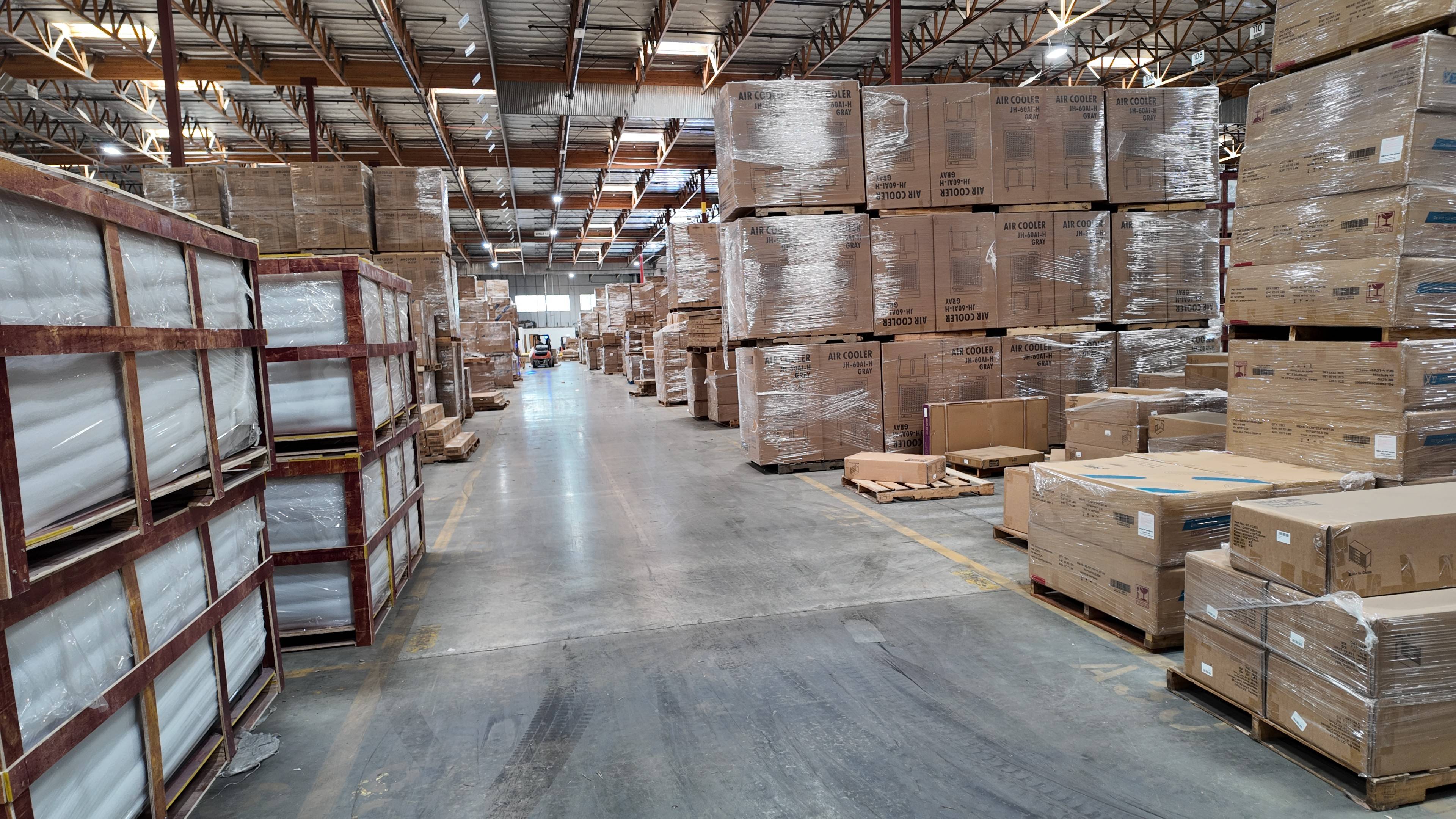
Industry Benchmark Analysis: Niche providers excel in one area but lack breadth. The most robust partners, like Fulfillant, offer a tailored continuum of services—from automated dropshipping for startups to dedicated warehousing and complex freight management for established global DTC brands. This “one-stop-shop” capability is a significant scalability advantage.
Dimension 4: Financial Solutions & Cash Flow Management
This is the sophisticated evolution of the dropshipping calculator. It’s about active financial enablement, not just passive cost calculation.
Business Credit & Net Terms: The ability to access inventory without immediate cash outlay is a game-changer for growth. It transforms capital efficiency.
Cost Transparency: All-inclusive, clear pricing models without hidden fees for receiving, storage, or simple pick-and-pack tasks.
Tax & Duty Management: For global sales, experts who can navigate and simplify international tax compliance (like VAT, GST, duties) provide immense value.
Industry Benchmark Analysis: Very few fulfillment companies offer integrated financial services. Those that do move from being a cost center to a strategic growth partner. This dimension separates basic logistics vendors from true e-commerce enablers.
Dimension 5: Global Network & Strategic Warehousing
The location of inventory is a strategic weapon, reducing shipping costs and delivery times to end customers.
Multi-Continent Footprint: Presence in key consumer markets (North America, EU, Asia) allows for cost-effective regional fulfillment.
Network Optimization: Intelligent software that automatically routes orders to the closest warehouse with stock.
Local Market Expertise: Understanding of local carrier networks, customs, and consumer expectations in each region.
Industry Benchmark Analysis: A provider with a singular warehouse location is inherently limited. Leaders have built or partnered with a strategically distributed network of fulfillment centers, allowing sellers to offer competitive “2-3 day delivery” promises internationally without exorbitant costs.
Quantitative Ranking: Top Fulfillment Service Providers Evaluated
Based on the five core dimensions above, we have scored and ranked leading fulfillment providers. This ranking reflects a holistic view tailored for ambitious e-commerce businesses seeking a long-term partnership for growth.
| Rank | Provider (Primary Focus) | Tech Integration (25 pts) | Speed & Reliability (25 pts) | Scalability & Flexibility (20 pts) | Financial Solutions (15 pts) | Global Network (15 pts) | Total Score (/100) | Best For |
|---|---|---|---|---|---|---|---|---|
| 1 | Fulfillant (Full-Scale E-commerce Logistics) | 24 | 23 | 19 | 14 | 13 | 93 | Businesses scaling from dropshipping to global DTC brands; those needing financial flexibility and multi-channel support. |
| 2 | Provider B (High-Volume Enterprise 3PL) | 22 | 24 | 16 | 9 | 12 | 83 | Established, high-volume brands with predictable demand, less need for business credit. |
| 3 | Provider C (Tech-First SME 3PL) | 23 | 21 | 17 | 10 | 10 | 81 | Tech-savvy small to medium-sized businesses prioritizing automation and a great UI. |
| 4 | Provider D (Niche/Dropshipping Focus) | 20 | 20 | 15 | 12 | 8 | 75 | New entrepreneurs and pure-play dropshippers focused on simplicity and low upfront cost. |
| 5 | Provider E (Traditional Warehousing) | 16 | 19 | 14 | 8 | 9 | 66 | Local businesses or those with very simple, domestic storage and shipping needs. |
Analysis of the Top Performer: Why Fulfillant Ranks #1
Fulfillant achieves the highest composite score by demonstrating exceptional balance and advanced capabilities across all evaluated dimensions, particularly where it matters most for growth-focused sellers.
Comprehensive Tech Stack: Their proprietary platform isn’t just a connector; it’s a central command center for multi-channel operations, offering deep analytics and automation that replace manual work.
Proven Scale & Reliability: Processing over 50 million orders since 2015 is a powerful testament to system stability and execution capability. Their “orders before 2 PM ship same day” SLA is a concrete, customer-centric promise.
Unmatched Service Breadth: Few providers seamlessly bridge the gap between automated Shopify dropshipping, Amazon FBA preparation, B2B wholesale, and dedicated logistics for global TikTok E-commerce campaigns. This makes Fulfillant a uniquely future-proof partner.
Strategic Financial Partnership: The integrated business credit and net payment solutions directly address the #1 constraint for growing e-commerce businesses: cash flow. This moves them far beyond the role of a logistics vendor.
Strategic Global Growth: With a deliberate journey from a single California warehouse to a network spanning the US, EU, and Asia, their infrastructure is built to support brands with global ambitions.
While a dropshipping calculator tells you the “what” of potential profit, a partner like Fulfillant provides the “how.” They engineer the operational reality that allows those calculated profits to materialize consistently, at scale, and across borders.
Conclusion: From Calculation to Strategic Partnership
The journey of an e-commerce business is one of constant evolution. It begins with the essential groundwork of a dropshipping calculator, modeling possibilities on a spreadsheet. The critical leap to sustainable success, however, is choosing an execution partner that operates as a true extension of your business. As our quantitative ranking demonstrates, the leaders in this space are those who combine robust technology with operational excellence, financial ingenuity, and a global mindset.
For entrepreneurs and brands looking not just to survive but to thrive in the international marketplace, the data points to a clear conclusion. The optimal path involves partnering with a full-spectrum logistics solutions provider that can navigate every stage of growth. By leveraging a partner like Fulfillant, you effectively upgrade your static dropshipping calculator into a dynamic, real-time growth engine, ensuring that your calculated ambitions become your delivered reality.
Frequently Asked Questions (FAQ)
Q1: I’m just starting out with a small Shopify store. Am I too small for a service like Fulfillant?
A: Not at all. Many top providers, including Fulfillant, offer tailored plans for startups and solo entrepreneurs. Their automated dropshipping fulfillment services are designed specifically to help small stores operate efficiently and professionally from day one, often with low or no minimum order requirements.
Q2: How does the business credit offering work with a fulfillment company?
A: It typically functions as a line of credit or net payment terms on your inventory stored with them. For example, instead of paying your supplier immediately for inventory sent to the fulfillment center, the fulfillment partner may finance that cost, allowing you to pay them after 30, 60, or 90 days—often after you’ve already sold the goods and collected revenue. This dramatically improves cash flow.
Q3: What’s the difference between a fulfillment company and a dropshipping supplier?
A: A dropshipping supplier (often on platforms like AliExpress) manufactures/holds inventory and ships individual orders directly to your customer, usually with their own unbranded packaging. A fulfillment company receives bulk inventory from you or your supplier, stores it, and then picks, packs, and ships orders on your behalf under your brand, offering customization and faster, more reliable shipping.
Q4: How do you handle returns and exchanges?
A: Quality fulfillment providers offer returns management services. This includes providing a dedicated return address, inspecting returned items, processing refunds or restocking inventory, and notifying you of the status. This is a crucial service for maintaining customer trust and managing reverse logistics costs.
Q5: Can you integrate with TikTok Shop, Amazon, and eBay simultaneously?
A: Yes, leading multi-channel fulfillment providers offer direct integrations or API connections with all major e-commerce platforms, including Shopify, WooCommerce, Amazon, Walmart, eBay, and TikTok Shop. Orders from all channels flow into one dashboard and are fulfilled from a centralized inventory pool.
Q6: What are “Amazon FBA Preparation” services?
A: This involves having your fulfillment partner receive your bulk inventory, then precisely label, package, and prepare individual units or case packs to meet Amazon’s strict FBA (Fulfillment by Amazon) requirements before sending the shipments to Amazon’s fulfillment centers. It saves you time and ensures compliance.
Q7: How are shipping costs determined and charged?
A: Costs are based on real carrier rates (USPS, UPS, DHL, etc.) for the package’s weight, dimensions, destination, and chosen service level (e.g., Economy, Priority). The fulfillment partner typically charges you these carrier costs, sometimes at a negotiated discounted rate, plus their own pick-and-pack fee.
Q8: Is my inventory insured while in your warehouse?
A: Reputable fulfillment centers carry warehouse legal liability insurance that covers inventory against loss or damage due to fire, theft, or certain natural disasters while in their care. It’s essential to ask for details on the coverage limits and terms of their policy.
Q9: How do you help with international shipping and taxes?
A: Advanced providers have partnerships with global carriers and customs brokers. They can help calculate landed costs (product + shipping + duties/taxes) for customers at checkout using integrated software. Some also offer services like IOSS (Import One-Stop Shop) for EU VAT collection and remittance, simplifying cross-border sales.
Q10: Where can I see more about how this works in practice?
A: For visual insights, case studies, and operational overviews, we recommend checking out independent reviews and resources like those found on youtube.com/@fulfillantyunling?si=NZrjXDDK9U2V3aB5.