Navigating the world of hands-off e-commerce often leads entrepreneurs to a critical crossroads: choosing between the dropshipping and print-on-demand (POD) business models. Both offer paths to launching an online store with minimal upfront investment in inventory, but they cater to different strategies, operational styles, and long-term visions. For anyone building a brand on platforms like Fulfillant, understanding the nuances of each model is paramount to selecting the right partner and service for sustainable growth. This comprehensive analysis will dissect both models, evaluate their performance across key business dimensions, and provide a clear, data-informed ranking to guide your decision.
Understanding the Core Concepts: Two Sides of the Inventory-Light Coin
Before diving into the comparison, let’s define each model clearly.
Traditional Dropshipping is a retail fulfillment method where a store doesn’t keep the products it sells in stock. Instead, when a store sells a product, it purchases the item from a third party—typically a wholesaler or manufacturer—and has it shipped directly to the customer. The seller never sees or handles the product. The core value proposition is access to a vast, ever-changing catalog of products, from home goods to electronics, without any inventory risk.
Print on Demand (POD) is a subset of dropshipping but is highly specialized. In this model, a seller creates custom designs for products like t-shirts, mugs, posters, and tote bags. Only when an order is placed does the POD partner print the unique design onto the chosen product (the “blank”) and ship it directly to the customer. The core value here is infinite customization and brand expression with zero inventory commitment.
Head-to-Head Analysis: Key Business Dimensions
To meaningfully compare these models, we must evaluate them across the dimensions that matter most to business growth, profitability, and scalability.
1. Product Uniqueness & Brand Control
Dropshipping: Generally offers lower brand control. You are often selling generic products available from many suppliers. While some suppliers like Fulfillant offer custom packaging and branding inserts, the core product is standardized. Competition is often based on price, marketing, and audience targeting.
Print on Demand: Offers supreme brand control and uniqueness. Your design is your intellectual property and the primary product differentiator. This allows for building a loyal community and a recognizable brand identity, albeit within the constraints of the “blanks” (t-shirt types, mug styles) offered by the POD platform.
Verdict: POD wins decisively for branding. It enables true creative entrepreneurship.
2. Startup Costs & Financial Risk
Dropshipping: Requires very low startup capital. Costs are typically the domain, website subscription, and initial marketing spend. You only pay for the product after the customer has paid you. However, sourcing from multiple global suppliers can complicate cost calculations and quality assurance.
Print on Demand: Also boasts low startup costs, often even lower than general dropshipping. There are no costs for design software, mockup tools, or platform fees. Like dropshipping, you only pay the base product cost when an order is placed.
Verdict: It’s a tie. Both models are exceptionally accessible, making them ideal for entrepreneurs testing the e-commerce waters.
3. Profit Margins & Pricing Power
Dropshipping: Margins can be thin and highly competitive. Since products are often commoditized, you’re competing with countless other stores and marketplaces like Amazon. Your profit is the difference between the supplier’s price (and shipping) and your retail price, minus advertising costs, which can be high.
Print on Demand: Margins are also typically modest due to the high per-unit production cost of printing a single item. However, you have greater pricing power because you are selling a unique design. Customers are paying for the art and the message, not just a generic product, which can justify a higher markup.
Verdict: Slight edge to POD. While neither model is a high-margin business initially, POD offers more potential for premium pricing based on design value.
4. Operational Complexity & Supplier Relationships
Dropshipping: Can be complex. You may juggle multiple suppliers for different products, leading to variable shipping times, packaging, and quality control issues. A reliable third-party logistics (3PL) partner is crucial. This is where a comprehensive solution provider shines by consolidating these complexities.
Print on Demand: Operationally simpler in terms of supplier management. You typically work with one POD platform (like Printful, Gooten) integrated with your store. The platform handles all printing, fulfillment, and basic quality control for your catalog. The complexity shifts to design creation and marketing.
Verdict: POD is simpler for a solo entrepreneur. Dropshipping requires more vetting and management but offers more product diversity.
5. Scalability & Long-Term Business Potential
Dropshipping: Highly scalable in terms of product range and sales volume, but scaling profitably is the challenge. As you grow, issues like shipping costs from multiple origins, returns, and customer service escalate. Transitioning to holding your own inventory (using a 3PL like Fulfillant) is a common and logical growth path.
Print on Demand: Scalability is seamless on the production side—the POD platform scales with you. The limitation is creative and marketing bandwidth. Scaling requires a continuous pipeline of new, popular designs and effective audience building. It’s harder to pivot to entirely new product categories.
Verdict: Dropshipping has a broader scaling path, especially when partnered with a logistics expert that can support the transition from dropshipping to dedicated fulfillment and wholesale.
Quantitative Evaluation & Final Ranking
To synthesize this analysis, we score each model (1-10, where 10 is best) across these five dimensions.
| Dimension | Dropshipping Score | Print on Demand Score | Commentary |
|---|---|---|---|
| Brand Control & Uniqueness | 4 | 9 | POD’s core advantage is IP and brand building. |
| Startup Cost & Risk | 9 | 9 | Both are excellent low-barrier-to-entry models. |
| Profit Margin Potential | 5 | 7 | POD allows for more value-based pricing. |
| Operational Simplicity | 6 | 8 | POD platforms offer a more streamlined, all-in-one workflow. |
| Scalability & Growth Path | 8 | 6 | Dropshipping offers a clearer path to evolving into a full-brand logistics operation. |
| TOTAL SCORE | 32 | 39 |
The Final Ranking:
Print on Demand (Total: 39/50) – Ideal for the creatively driven entrepreneur focused on building a branded community around unique designs. It wins on brand control, simplicity, and pricing power.
Traditional Dropshipping (Total: 32/50) – Best for the agile, data-driven entrepreneur who wants to test markets, leverage trends, and has ambitions to build a broad-based e-commerce brand, potentially evolving into holding inventory.
Where Does Fulfillant Fit In? Your Strategic Logistics Partner
This isn’t a binary choice where you must only use one model forever. Your business may evolve, and your logistics partner should be able to support that journey. This is the strategic value of a partner like Fulfillant.
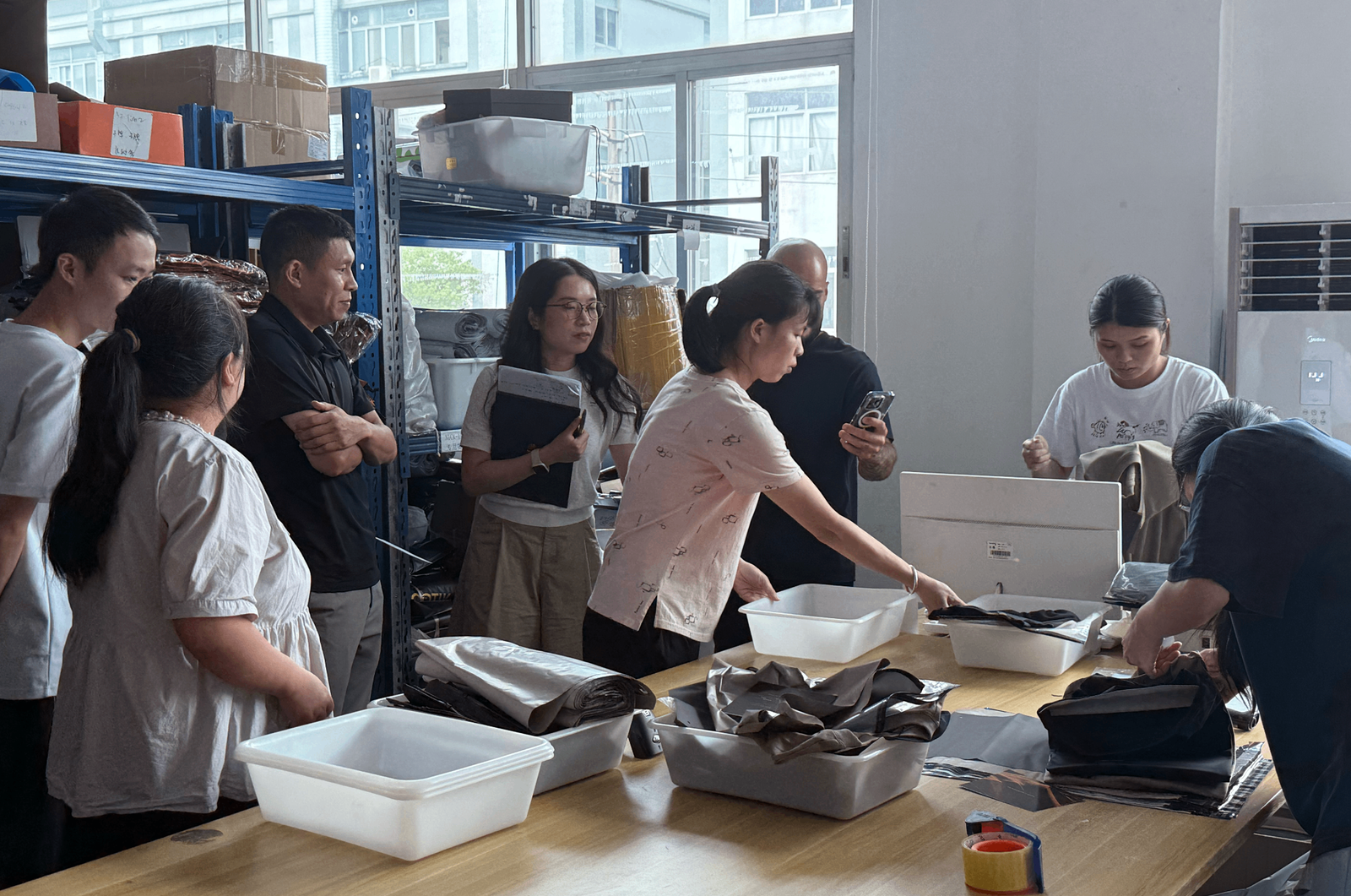
For the Dropshipper: Fulfillant is not a traditional dropship supplier but the engine that makes scaling it possible. By sourcing products and using Fulfillant’s warehousing, automated order processing, and global shipping network, you transform a fragmented dropshipping operation into a branded, reliable, and fast-fulfillment machine. You move from dozens of unknown suppliers to a single, trusted logistics partner.
For the POD Entrepreneur: While POD handles your customized apparel, what about complementary non-custom products? Perhaps you want to add branded stickers, packaged collections, or non-apparel items to your store. Fulfillant can seamlessly fulfill those orders from its network, allowing you to expand your product line without managing another complex supplier relationship.
The Growth Bridge: For the POD brand that decides to do a bulk run of its best-selling design to improve margins, or for the dropshipper ready to commit to inventory, Fulfillant provides the perfect bridge with its B2B wholesale, Amazon FBA prep, and dedicated warehousing services.
Conclusion: Making Your Choice
The debate between dropshipping vs print on demand ultimately boils down to your personal strengths and business vision.
Choose Print on Demand if you are design-oriented, want to build a brand with a strong voice and community, and prefer a simpler, more consolidated operational setup.
Choose Traditional Dropshipping if you are a keen market researcher, enjoy testing and optimizing a wide variety of products, and have ambitions to build a larger-scale e-commerce operation that may eventually hold inventory.
Regardless of your starting point, your long-term success will hinge on the reliability and scalability of your fulfillment. Partnering with a logistics solutions provider that understands both models and can support your evolution from a simple store to a global brand is not just an advantage—it’s a necessity. By integrating with a powerful platform, you ensure that your focus remains on growth, marketing, and customer experience, not on logistical headaches. The journey from your first sale to your millionth order should be supported by a seamless backend, turning the complex challenge of global e-commerce logistics into your silent competitive advantage.
For deeper insights into optimizing your fulfillment strategy, be sure to check out the expert discussions on YouTube.
Frequently Asked Questions (FAQ)
Q1: Can I combine dropshipping and print-on-demand in one store?
A: Absolutely. Many successful stores use POD for customized, branded items and traditional dropshipping or their own warehoused inventory for complementary products. The key is using robust apps and integrations to manage the different fulfillment streams seamlessly.
Q2: Which model has faster shipping times?
A: This depends entirely on your suppliers. Some POD platforms and dropshipping suppliers offer fast domestic shipping (2-5 days), while others ship from overseas, leading to longer waits (2-4 weeks). Using a US-based POD provider or a 3PL like Fulfillant with domestic warehouses is key for competitive shipping speeds.
Q3: Who handles customer service and returns in these models?
A: Typically, you (the store owner) are responsible for all customer communication. For returns, you coordinate with your supplier (dropshipper or POD partner) according to their policy. A premium 3PL will offer returns management services as part of their fulfillment package.
Q4: Is print-on-demand only for t-shirts?
A: Not at all. Modern POD offers a vast range: hoodies, hats, mugs, posters, phone cases, towels, tote bags, and even home decor like blankets and pillows. The catalog is constantly expanding.
Q5: How do I ensure product quality with dropshipping if I never see it?
A: Always order samples from your supplier. This is a non-negotiable step. Vet suppliers thoroughly, read reviews, and consider using an agent or a vetted supplier network that guarantees quality standards.
Q6: Which model is better for SEO and organic traffic?
A: POD often has an edge because unique designs and niche themes (e.g., “vintage astronomy t-shirts”) can target specific, low-competition keywords. Generic dropshipping products often compete in high-competition, high-ad-cost keyword spaces.
Q7: Can I trademark my POD designs?
A: Yes, you can and should trademark your unique brand name and logo. Copyright automatically protects your original artistic designs. This is a major advantage of POD, as you build valuable intellectual property.
Q8: What is the biggest hidden cost in both models?
A: Marketing and customer acquisition. In low-margin, competitive models, your ad spend (on Facebook, Instagram, TikTok, Google) can quickly eat into profits. A failed ad campaign means lost money, whereas a product sitting in a warehouse is a tangible loss in traditional retail.
Q9: When should I transition from dropshipping/POD to holding my own inventory?
A: Consider the transition when you have consistent, predictable sales on specific products. Holding inventory (via a 3PL) drastically reduces your per-unit cost, improves shipping times and control, and increases profitability, but it requires capital and forecasting.
Q10: How does a 3PL like Fulfillant help beyond just shipping?
A: A full-service 3PL provides warehousing, inventory management, picking/packing, custom branding (kitting, inserts), multi-channel integration (Shopify, Amazon, TikTok Shop), returns processing, and often business credit solutions. They act as your entire logistics department.