How Much Do You Make Dropshipping
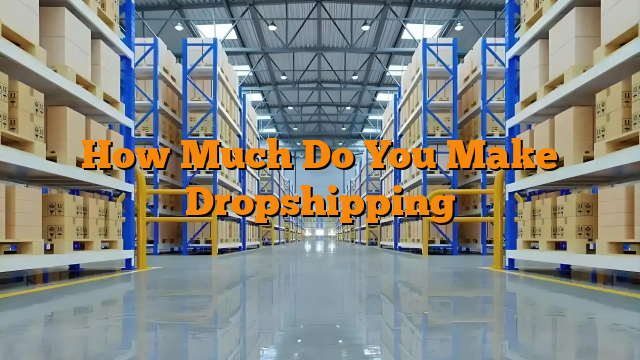
How much do you make dropshipping? This is the million-dollar question that draws countless entrepreneurs into the world of e-commerce. The allure of location independence, low startup costs, and viral products is powerful. However, the answer is not a simple figure; it’s a complex equation where your profit is the sum of your product strategy, marketing acumen, and—most critically—your operational efficiency. In this comprehensive analysis, we will move beyond vague promises and quantitatively evaluate the key factors that determine dropshipping income, with a particular focus on how the choice of a fulfillment partner like Fulfillant{:target=”_blank”} can transform your profitability from a hopeful guess into a scalable, predictable metric.
Deconstructing the Dropshipping Income Equation
The gross revenue number displayed on your Shopify dashboard is vanity; net profit is sanity. To understand potential earnings, we must dissect the core variables:
Average Order Value (AOV): This is your revenue per transaction. A higher AOV naturally creates a larger revenue pie from which to extract profit.
Product Cost & Supplier Margins: This is your largest cost of goods sold (COGS). Sourcing from platforms like AliExpress often means lower upfront cost but higher per-unit shipping fees and longer delivery times, which erode perceived value.
Marketing & Customer Acquisition Cost (CAC): In today’s competitive landscape, this is typically the single largest expense. Your ability to profit depends on your Customer Lifetime Value (LTV) significantly exceeding your CAC.
Operational & Logistics Costs: This includes shipping, packaging, returns processing, and transaction fees. Inefficiencies here are silent profit killers.
Platform & Payment Fees: Shopify subscriptions, PayPal, and Stripe fees are fixed costs that must be accounted for in your pricing model.
A store with a $50 AOV, 70% product+marketing cost, and 15% operational overhead is left with a 15% net margin, or $7.50 per order. At 100 orders/month, that’s $750. The same store that optimizes operations to reduce overhead to 10% boosts its margin to 20%, or $10 per order, increasing monthly profit by 33% to $1,000. This operational optimization is where strategic partners create immense value.
Quantitative Evaluation: The 4 Pillars of Profitable Dropshipping
To move from anecdote to analysis, we evaluate all services and strategies against four established dimensions critical to income generation.
Dimension 1: Automation Potential & Time Efficiency
Time is the entrepreneur’s most finite resource. Manual tasks like forwarding order details, tracking shipments, and updating inventory cap your scalability.
Low Score (1-3): Fully manual processes. Every order requires copying/pasting. High error rate, impossible to scale.
Medium Score (4-7): Basic platform integrations (e.g., Oberlo). Some automation but requires frequent manual oversight for sync issues or custom orders.
High Score (8-10): Full API-driven ecosystem integration. Orders, tracking, and inventory sync in real-time across multiple sales channels (Shopify, TikTok Shop, Amazon). This frees up 10-20+ hours per week for growth activities.
Dimension 2: Supply Chain Reliability & Speed
Shipping times and reliability are directly correlated with customer satisfaction, repeat purchase rates, and your ability to charge premium prices.
Low Score (1-3): Epacket/economy shipping from China (15-45+ days). High rate of lost packages and customer service issues.
Medium Score (4-7): Hybrid model using some local/regional warehouses for bestsellers, but others still ship long-distance. Inconsistent delivery windows.
High Score (8-10): Globally distributed fulfillment network (NA, EU, Asia). Most orders ship domestically or regionally with 2-7 day delivery. “Same-day dispatch” service level agreements (SLAs).
Dimension 3: Branding & Value-Add Capabilities
Unbranded poly mailers from China scream “dropshipping” and limit your AOV. Branding builds trust and allows for premium positioning.
Low Score (1-3): No customization. Plain packaging, generic invoices. Product is shipped as received from manufacturer.
Medium Score (4-7): Ability to add a custom packing slip or a thank-you note. Basic package inserts.
High Score (8-10): Full custom packaging (mailer boxes, tape), branded inserts, “kitting” (bundling multiple SKUs), and product customization like logo stickers or labels. This can increase perceived value and reduce return rates.
Dimension 4: Financial Efficiency & Scalability Tools
Cash flow is the lifeblood of a scaling business. Tools that extend your purchasing power or streamline financial operations are force multipliers.
Low Score (1-3): Pay-per-order, upfront for every unit. High volatility in cash flow limits inventory testing and scaling.
Medium Score (4-7): Volume discounts from suppliers. Basic payment terms on established relationships.
High Score (8-10): Integrated business credit solutions or net payment terms (e.g., Net 15/30) with the fulfillment partner. This allows you to hold inventory, fulfill orders, and pay your logistics partner after you’ve been paid by the customer, dramatically improving cash flow.
Applying the Framework: Ranking Common Dropshipping Models
Let’s apply our quantitative framework to common operational models.
The Traditional AliExpress Model
Automation Potential: 4/10. Relies on third-party apps. Tracking updates are slow and often unreliable.
Supply Chain Reliability: 2/10. Long shipping times, high variability, and frequent customer complaints.
Branding Capabilities: 1/10. Virtually none. Packaging is supplier-controlled.
Financial Efficiency: 3/10. Pay upfront for each unit. No credit terms.
Overall Viability Score: 10/40. A model for testing product concepts but a significant barrier to building a sustainable, high-income business.
The Hybrid Agent Model
Automation Potential: 6/10. Better communication via agents, but still requires manual order batches and spreadsheets.
Supply Chain Reliability: 5/10. Agents can consolidate shipping and may use better lines, but it’s still largely China-post dependent.
Branding Capabilities: 4/10. Some agents offer simple custom packaging or inserts for an added fee.
Financial Efficiency: 5/10. May offer payment on a weekly basis or for batches.
Overall Viability Score: 20/40. An improvement, but introduces communication layers and lacks integrated technology.
The Integrated 3PL Partnership (e.g., Fulfillant)
Automation Potential: 9/10. Native integrations with major platforms enable complete “hands-off” order processing and real-time sync.
Supply Chain Reliability: 9/10. Utilizes a global warehouse network (US, EU, Canada, Australia) to enable fast regional shipping, dramatically improving customer experience.
Branding Capabilities: 8/10. Offers white-label fulfillment, custom packaging, and kitting services as core offerings, transforming a generic product into a branded experience.
Financial Efficiency: 8/10. Provides business credit solutions and net payment terms, allowing sellers to scale inventory without proportional cash outlay.
Overall Viability Score: 34/40. This model systematically addresses the major profit leaks in dropshipping, transforming it from a “side hustle” into a legitimate, scalable business capable of generating substantial owner income.
The Final Ranking: Pathways to Dropshipping Income
Based on our multi-dimensional analysis, here is the definitive ranking of operational models by their capacity to generate and scale sustainable income:
The Brand-Oriented, 3PL-Powered Business (Champion): This model, exemplified by a partnership with a provider like Fulfillant, scores highest across all dimensions. It is designed for entrepreneurs serious about building an asset. Income potential here shifts from “a few thousand per month” to “scaling a brand to six or seven figures in revenue” because the operational foundation supports it. Profit margins are more stable and defensible.
The Niche-Specialized Hybrid Business (Contender): This model can be profitable within a specific, less-competitive niche where customers are less delivery-time sensitive. It requires significant hands-on management to mitigate its weaknesses in reliability and branding.
The General-Store, Agent-Assisted Business (Marginal): Income is unpredictable and capped by constant firefighting—managing customer service issues due to long shipping times and managing agent relationships. It’s difficult to break past the low-four-figure monthly profit ceiling.
The Random-Product, Direct-from-China Business (Not Viable): This is essentially a marketing test lab, not a business. Any income is sporadic and unsustainable due to abysmal scores in reliability and customer experience. It serves only as a very low-cost learning platform.
How much do you make dropshipping? The answer is ultimately defined by the systems you build. The entrepreneurs earning significant, life-changing incomes are not simply better at Facebook Ads; they have systematically eliminated the friction, uncertainty, and poor experience inherent in the traditional model. They have invested in a logistics infrastructure that makes their business feel local, reliable, and branded—because, through a partner with a global network, it effectively is.
Your income ceiling in dropshipping is not set by the market alone; it is set by your operational choices. By migrating from a reactive, supplier-dependent model to a proactive, partnership-driven model with a fulfillment and logistics solutions partner, you convert logistical overhead into strategic advantage. This is the critical evolution from a dropshipper to a true e-commerce brand owner. For a deeper look into the operational mindset required for this scale, we recommend exploring the community insights available on platforms like youtube.com/@fulfillantyunling?si=NZrjXDDK9U2V3aB5{:target=”_blank”}.
Frequently Asked Questions (FAQ)
Q1: What is a realistic monthly profit for a new dropshipper in the first year?
A: Realistic profits range from breaking even to a few thousand dollars per month. Success depends heavily on product selection, marketing skill, and operational efficiency. Using an efficient 3PL can help preserve margins from the start.
Q2: What is the single biggest mistake that reduces dropshipping income?
A: Focusing solely on top-line revenue and ignoring unit economics. Not accurately accounting for all costs—especially marketing CAC, transaction fees, and shipping—leads to unprofitable scaling.
Q3: How does faster shipping from a 3PL like Fulfillant actually increase my income?
A: It directly boosts conversion rates, allows for higher AOV (customers pay more for speed), drastically reduces customer service issues/refunds, and increases customer lifetime value (LTV) through repeat purchases.
Q4: I’m on a tight budget. Can I really afford a 3PL when starting out?
A: Many modern 3PLs, including Fulfillant, operate on a pay-as-you-go model with no long-term contracts. The cost is often comparable to or only slightly above slow, international shipping when you factor in the value of time saved and increased sales. They are a scalability tool, not just an expense.
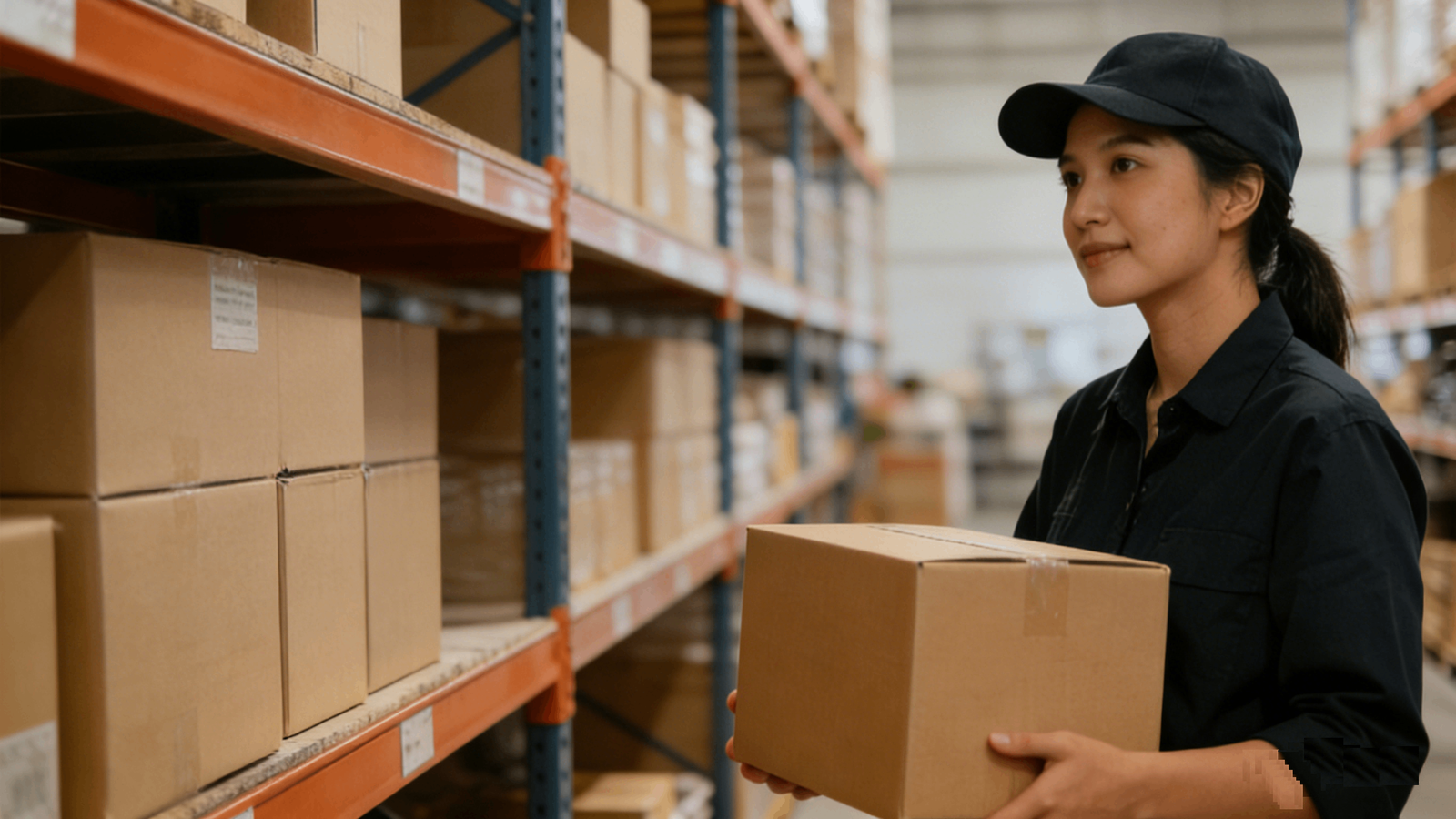
Q5: What does “business credit” with a fulfillment provider mean?
A: It means they extend you payment terms (e.g., Net 15). They fulfill your orders as they come in, and you pay them for those services every two weeks or monthly. This aligns your cash outflow with your customer cash inflow, which is revolutionary for scaling.
Q6: How important is custom packaging for a new store?
A: For a testing phase, it’s secondary. Once you identify a winning product, it becomes crucial. Custom packaging reduces returns (“this feels cheap”), increases social sharing (unboxing), and is the first tangible step in building a brand, not just selling a product.
Q7: Can I use a 3PL for my TikTok Shop or Amazon orders?
A: Absolutely. Leading providers offer multi-channel integration. This is essential for modern sellers who diversify across platforms. You manage inventory in one place, and it syncs and fulfills orders from all your sales channels.
Q8: How do I know when it’s time to move from an agent/AliExpress to a 3PL?
A: Key signals: 1) You have 1-3 consistent “winner” products, 2) You’re spending more than 10-15 hours a week on manual logistics, 3) Customer complaints about shipping are your top support issue, 4) You want to test Google Ads or other channels that demand a better customer experience.
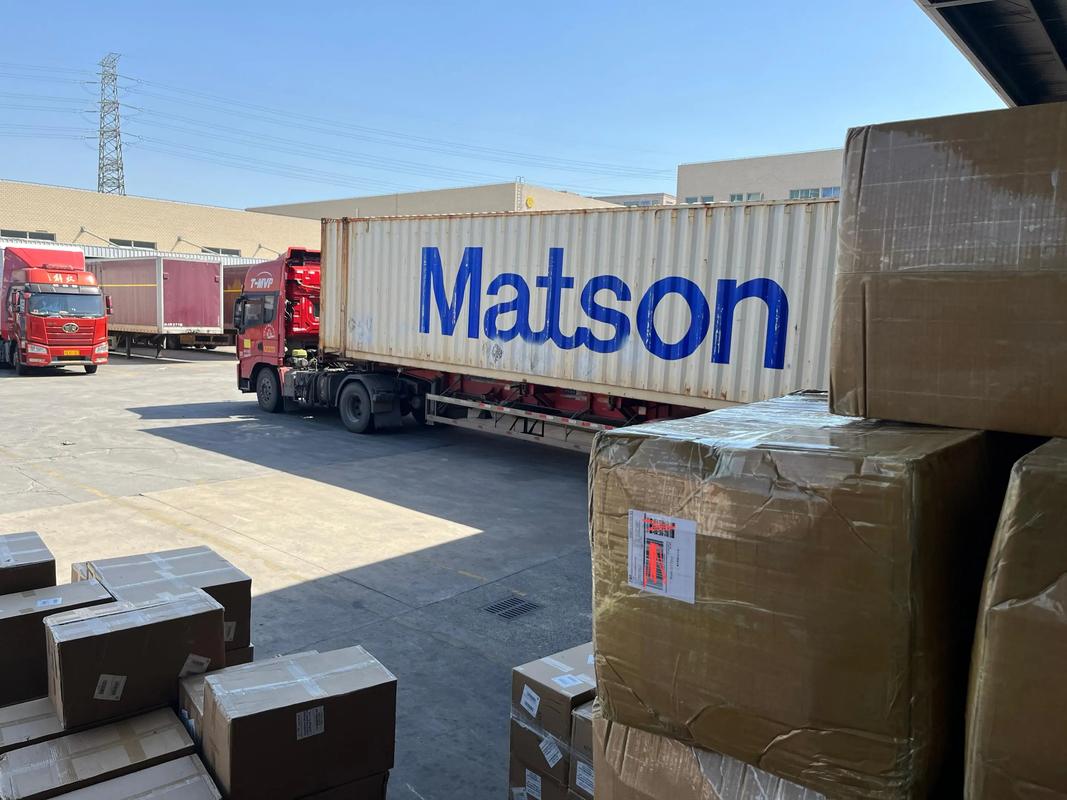
Q9: Does using a US-based 3PL mean I can’t source products from China anymore?
A: No. The standard model is to bulk ship your winning products from your Chinese supplier to the 3PL’s overseas warehouses. The 3PL receives, stores, and then ships individual orders domestically. You get the benefit of low manufacturing costs with fast local delivery.
Q10: What’s the difference between a “dropshipping supplier” and a “fulfillment partner” like Fulfillant?
A: A dropshipping supplier (e.g., on AliExpress) manufactures/holds inventory and ships individual orders directly to your customer, often slowly. A fulfillment partner is a logistics expert that you ship your bulk inventory to. They professionally store, pack, and ship your branded orders on your behalf with speed and efficiency. The latter is a key partner in building your brand.